 OnCricketBetting
T20 Cricket Betting Strategies & Market Tips
 Available in US
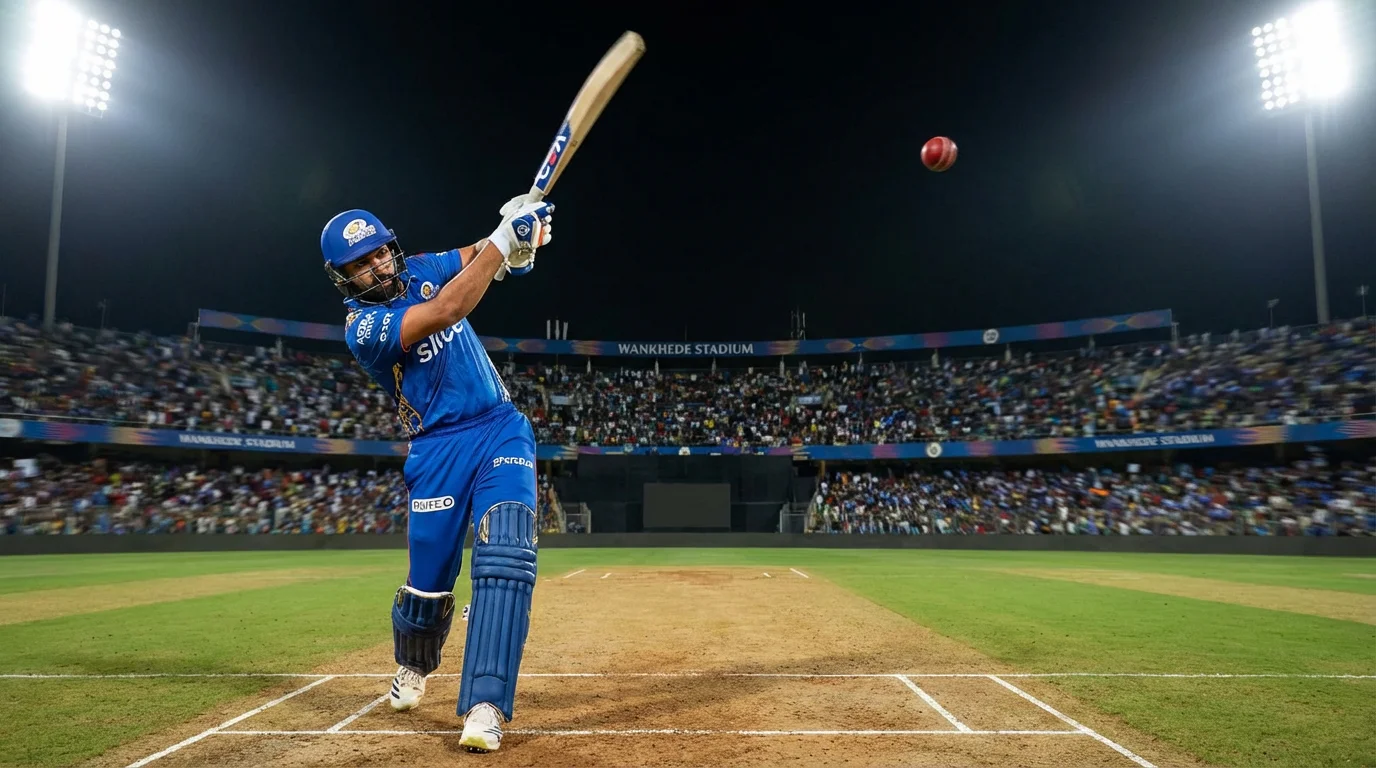
Twenty20 cricket was designed to entertain, and it has succeeded so thoroughly that it now drives the majority of global cricket betting turnover. Matches last around three hours, boundaries fly at a rate that would horrify a Test purist, and outcomes can swing on a single over. For bettors, T20 is both the most accessible format and the most dangerous. The speed that makes it exciting also makes it unforgiving — one poorly timed bet and the match has already moved past you.
This guide covers the strategic nuances of T20 cricket betting, from the structural phases of an innings to the player-level metrics that separate sharp analysis from guesswork.
Exploiting Powerplay Statistics & Run Rates
The first six overs of a T20 innings — the mandatory powerplay — operate under fielding restrictions that allow only two fielders outside the inner ring. This creates an environment that overwhelmingly favours aggressive batting. Boundaries are easier to find, and bowlers are forced to attack without the protection of a spread field.
Powerplay betting markets have become increasingly popular, with bookmakers offering lines on powerplay runs, wickets, and boundaries. The average powerplay score in international T20 cricket hovers around 45-55 runs, but this average masks enormous variance. A team with aggressive openers on a flat pitch can reach 65-70 in the powerplay, while a quality new-ball bowling attack on a seaming surface can restrict the opposition to 30-35.
The key analytical question for powerplay betting is matchup-specific. Which openers are facing which bowlers, and what do the conditions favour? An opener who averages 35 at a strike rate of 155 against pace in the powerplay is a fundamentally different proposition depending on whether he is facing a 140kph swing bowler or a 130kph hit-the-deck merchant. Powerplay run totals are not random — they are driven by identifiable matchup dynamics that the market does not always price with sufficient granularity.
Wickets in the powerplay carry disproportionate importance for match winner odds. Losing two wickets in the first six overs reduces the batting team's expected total by roughly 15-20 runs on average, and the live odds respond accordingly. If you have a view that a particular bowling attack is likely to take early wickets — perhaps because of favourable conditions or a known vulnerability in the opening pair — the pre-match or early in-play market on powerplay wickets can offer strong value.
The Middle Overs: Cricket's Quiet Battleground
Overs 7 through 15 in a T20 innings are the least glamorous phase, and they are also the most strategically important for bettors who understand run-rate dynamics. During the middle overs, fielding restrictions ease (up to five fielders allowed outside the 30-yard circle from over 7 onwards), and captains typically deploy their most economical bowlers to restrict scoring.
The scoring rate during the middle overs is lower than both the powerplay and the death, averaging around 7.5-8.5 runs per over in most international T20s. But the variance within this average is what creates betting opportunities. Teams that rotate strike efficiently and pick off the occasional boundary can maintain a rate above 9 per over in the middle phase, which puts them on track for totals above 180. Teams that get bogged down — playing dot balls, failing to rotate, losing wickets to soft dismissals — often find themselves stranded below 160.
Middle-over performance is heavily influenced by spin bowling. The middle overs are when captains unleash their spinners, and the quality of the spin attack versus the batting lineup's ability to play spin is one of the strongest predictive factors for overall innings totals. In leagues like the IPL and Big Bash, where squad composition varies significantly between teams, the spin-versus-batting matchup during the middle overs is an underexploited analytical edge.
The market tends to be less attentive during the middle overs of a live T20 match. The frenzy of the powerplay has subsided, and the drama of the death overs has not yet begun. This quieter period is when in-play odds can drift into territory that does not reflect the actual match situation. If you notice a batting team accumulating steadily at 8.5 per over with seven wickets in hand and a deep batting lineup, the odds might still reflect the lower-scoring middle-over template rather than the reality that this team is well-positioned for a massive death-over acceleration.
Death Overs: Where Fortunes Are Made and Lost
The final five overs of a T20 innings are the most volatile phase in cricket. Batsmen swing at almost everything, bowlers attempt high-risk deliveries like yorkers and slower balls, and the run rate can explode from 8 per over to 14 per over within the span of two good hits. Betting on death-over outcomes requires nerve and a specific understanding of which players thrive under this pressure.
Death bowling is a specialist skill, and the gap between elite death bowlers and average ones is enormous. A bowler like Jasprit Bumrah or Jofra Archer can consistently execute yorkers under pressure, keeping the run rate below 9 per over in the death. A bowler without that precision might concede 15-20 runs in a single over. When assessing a team's likely total, the quality of the bowling attack's death-over options is at least as important as the batting lineup's firepower.
From a betting perspective, the death overs create opportunities in several markets. Over-by-over run totals, total match sixes, and individual player boundaries are all heavily influenced by what happens in overs 16-20. If you know that a particular team's death bowling is vulnerable — perhaps their best yorker bowler is injured or their fifth bowler is a part-timer — the over on innings runs and the over on total sixes become structurally attractive bets.
The death overs also produce the most dramatic swings in match winner odds during a chase. A batting team needing 50 off 30 balls with eight wickets in hand is in a strong position, but two quick wickets can flip the equation entirely. The market reacts to each delivery, and the speed of these reactions means that bettors who have already formed a view on the likely outcome can find moments where the live odds overshoot in either direction.
Strike Rates and Batting Positions
Strike rate is the defining metric of T20 batting, and understanding how it varies by batting position is essential for top batsman, total runs, and player performance markets. An opener's strike rate in the powerplay tells a different story from a middle-order batsman's strike rate against spin in the middle overs, even if the raw numbers are similar.
The most valuable T20 batsmen for betting purposes are those who combine high strike rates with consistency. A player who averages 30 at a strike rate of 150 is more bankable than one who averages 25 at a strike rate of 170, because the higher average indicates more frequent meaningful contributions. However, in specific markets like "most sixes" or "highest individual score," the higher strike rate player offers more upside because their style produces more extreme outcomes.
Batting position determines opportunity. Openers face the most balls and have the longest runway to build an innings, which is why they dominate top batsman markets. Number three batsmen often enter during the powerplay and must transition between building an innings and accelerating, which makes their output more variable. Lower middle-order batsmen (positions 5-7) typically face fewer balls but are expected to strike at 160+ from ball one. For player performance markets, understanding the typical ball count for each batting position in a given team's lineup helps you assess whether the bookmaker's line is realistic.
Reading T20 Conditions
Not all T20 pitches are created equal, and the modern assumption that every T20 game is a batting paradise is dangerously wrong. While some venues — Chinnaswamy Stadium in Bangalore, Sharjah Cricket Stadium in certain phases — are genuine run-fests, others consistently produce competitive or even low-scoring T20s. Colombo's R. Premadasa Stadium, for example, assists spin heavily and regularly produces totals below 150.
Dew is the great equaliser in T20 cricket, particularly for evening matches in the subcontinent and the Middle East. When dew forms on the outfield during the second innings, the ball becomes slippery for bowlers, fielding becomes harder, and scoring rates increase. The chasing team gains a systematic advantage that the toss result amplifies. If you are betting on a T20 match scheduled for an evening start in conditions where dew is likely, the team batting second has a built-in edge that should be reflected in your analysis.
Boundary size is another variable that casual bettors overlook. A ground with 65-metre straight boundaries plays very differently from one with 58-metre boundaries. Smaller grounds inflate sixes and total runs, making the over on run totals and the over on sixes more likely to land. Larger grounds suppress boundaries and increase the importance of running between the wickets. Checking ground dimensions before placing bets on any boundary-related market is a basic due diligence step that too many bettors skip.
The Format That Demands Specificity
T20 cricket betting punishes generalisation and rewards granularity. Saying "this team has a strong batting lineup" is meaningless unless you can specify which batsmen perform in which phase, against which type of bowling, on which surface. The bettors who profit from T20 are those who think in matchups rather than reputations, in phases rather than innings, and in conditions rather than averages.
Every T20 league — IPL, Big Bash, PSL, SA20, The Hundred — has its own personality shaped by player pools, venues, and scheduling. The strategies that work in the IPL might not transfer to the Big Bash, where Australian domestic players form the backbone of squads and conditions favour seam bowling more than spin. Treating all T20 cricket as interchangeable is a mistake the market sometimes makes and informed bettors can exploit. The more specific your knowledge, the sharper your edge.
