 OnCricketBetting
 Live Cricket Betting Strategies & Expert In-Play Tips
 Available in US
The transformation of cricket betting over the past decade owes more to live betting than any other single innovation. Where once bettors placed their wagers before the toss and waited anxiously through the match, in-play betting now allows continuous engagement with every delivery, every partnership, every momentum shift. For those who understand how to read cricket as it unfolds, live betting offers opportunities that pre-match markets simply cannot provide.
What distinguishes skilled live bettors from those merely adding excitement to their viewing experience is the ability to process information faster than the market adjusts. When a key batsman falls to an unexpected delivery, odds shift but not always instantaneously or accurately. When weather conditions deteriorate mid-match, implied probabilities must recalibrate. When a team's body language signals either surrender or resurgence, the astute observer can act before these sentiments fully manifest in results and prices. This informational edge, however fleeting, represents the foundation of profitable live betting.
The challenges of in-play betting deserve acknowledgment upfront. Latency between broadcast and actual play means you are always watching history rather than the present. Bookmakers employ sophisticated algorithms and faster data feeds than most viewers access. Emotional decision-making intensifies when watching matches you have bet on. These obstacles do not make profitable live betting impossible, but they do demand specific skills and disciplined approaches that differ substantially from pre-match betting.
This guide explores everything required to approach live cricket betting seriously: understanding how odds move in real time, identifying the markets where value most frequently appears, developing format-specific strategies for T20s, ODIs, and Tests, and maintaining the psychological discipline that separates successful bettors from expensive enthusiasts. The goal is not to make you feel clever while losing money more entertainingly, but to provide the analytical framework for genuine improvement.
Fundamentals of Live Cricket Betting
The Mechanics of In-Play Wagering
Live cricket betting allows punters to place wagers after a match has begun and continues until the final ball is bowled. Unlike pre-match betting where odds are set and remain static once markets close, in-play markets feature constantly adjusting odds that respond to match developments. Every wicket, boundary, dot ball, and over completion triggers price recalculations as bookmakers reassess each team's winning probability based on the current match state.
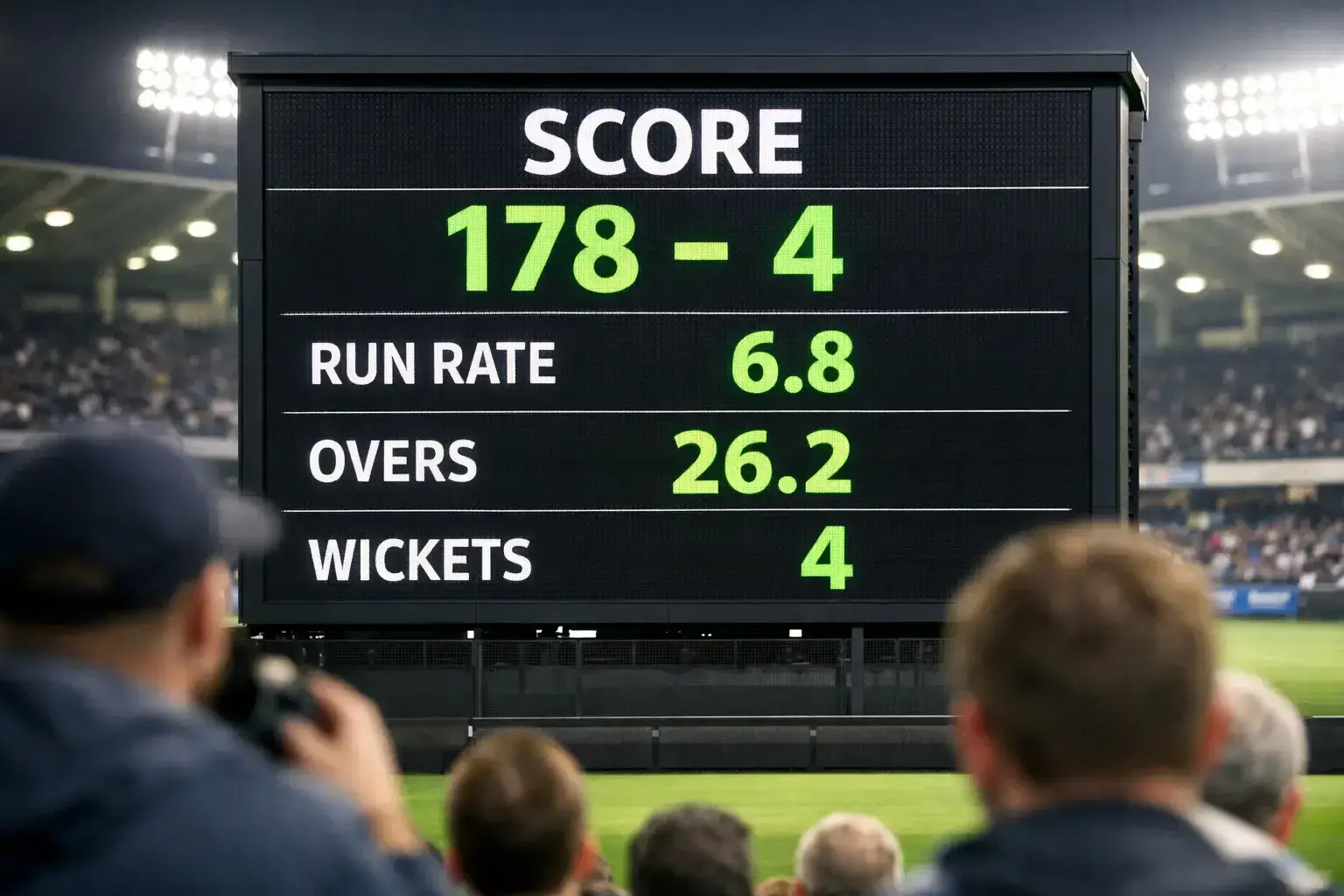
The infrastructure supporting live betting has grown remarkably sophisticated. Bookmakers employ traders who watch matches and adjust odds manually for significant events, supplemented by algorithms that handle routine ball-by-ball updates. Data feeds from official scorers reach bookmakers before broadcast viewers see the action, creating structural timing advantages that bettors must acknowledge. When you see a wicket fall on television, the bookmaker has typically already suspended betting and adjusted odds.
Market suspension represents an important concept for live bettors. During each delivery in cricket, bookmakers suspend betting to prevent exploitation of their broadcast delay disadvantage. Markets reopen between balls with adjusted prices reflecting the previous delivery's outcome. Some bookmakers offer ball-by-ball markets that remain open during deliveries but carry substantial margins to compensate for timing risks. Understanding when markets are open, suspended, and how quickly they reopen affects which betting approaches remain viable.
Why Live Betting Differs Fundamentally from Pre-Match
Pre-match betting rewards thorough preparation: researching team news, analyzing conditions, studying historical patterns, and identifying mispriced odds before matches begin. Once the bet is placed, the bettor's job is finished. Live betting inverts this relationship, placing premiums on real-time analysis, quick decision-making, and the ability to recognize evolving situations that deviate from pre-match expectations.
Consider a simple example: a pre-match bettor backs the team winning the toss because they expect to bat first and the pitch appears batting-friendly. The toss winner actually chooses to bowl, invalidating the entire thesis. The pre-match bettor is stuck with their position. The live bettor, however, can reassess: perhaps the pitch has more moisture than expected, perhaps the team has intelligence about deteriorating conditions later. Live betting allows continuous recalibration that pre-match betting prohibits.
This flexibility creates both opportunity and danger. Opportunity because mistakes in pre-match assessment can be corrected, and because events that fundamentally change match dynamics create new value. Danger because the same flexibility enables chasing losses, overtrading, and emotional decision-making that compounds errors rather than correcting them. The discipline required for profitable live betting exceeds what most bettors possess, which is precisely why edge exists for those who do possess it.
The Information Ecosystem During Matches
Successful live betting requires understanding what information you have, what information bookmakers have, and where gaps between these information sets might exist. Bookmakers have faster data feeds, professional traders, and algorithmic pricing. Bettors have their own match-watching observations, specialist knowledge of particular players or conditions, and occasionally, genuinely unique analytical frameworks.
Television broadcasts provide more than just ball-by-ball action. Camera work reveals pitch behavior, atmospheric conditions, player body language, and field placements that statistics cannot capture. A bowler wiping sweat excessively, a batsman repeatedly glancing at deteriorating light, fielders arguing about positioning: these observations inform judgments about momentum and trajectory that pure numbers miss. Bettors who watch attentively gain insights that purely algorithm-driven pricing cannot incorporate.
Commentary and punditry offer variable value. Former players often provide genuine tactical insights about conditions, player tendencies, and strategic considerations. However, broadcasters serve entertainment purposes and may emphasize drama over analytical accuracy. Learning which commentators provide reliable insights versus which merely fill airtime with cliches improves your information processing during live betting sessions.
How Live Cricket Odds Work
Understanding Real-Time Price Movements
Cricket odds during live betting respond to a combination of actual match events and anticipated future developments. When a wicket falls, odds adjust to reflect the new match state. When a batsman reaches fifty, suggesting they are well-set, the batting team's odds may shorten even without the wicket directly changing the score much. These anticipatory adjustments reflect bookmakers pricing in expected future developments based on the current situation.
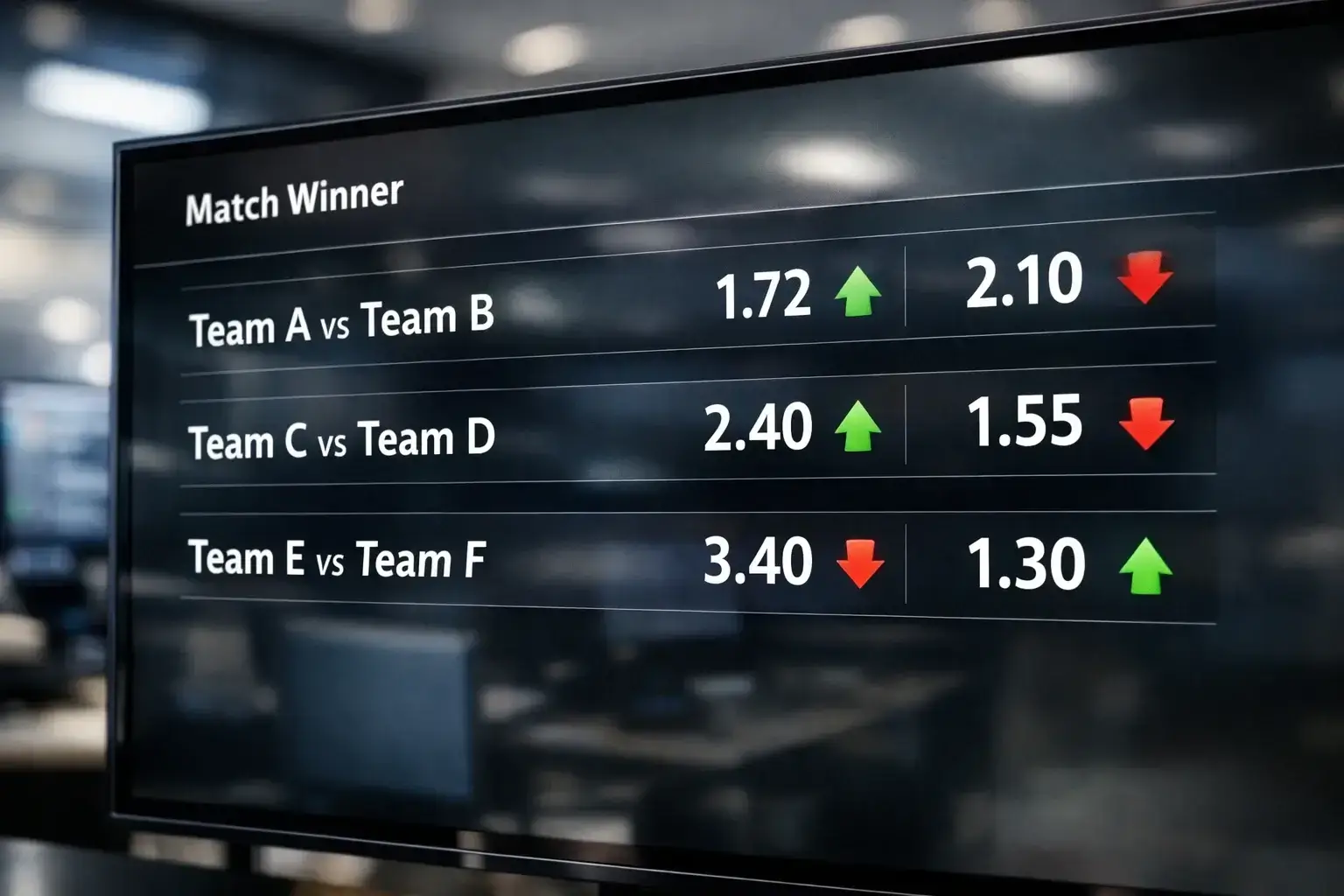
The magnitude of odds movements reveals market expectations about event significance. When a star batsman falls early, odds might swing dramatically because the market expected substantial runs from that player. When a lower-order batter departs, the adjustment proves smaller. Tracking how odds respond to different events helps bettors understand what the market has already priced in and where potential mispricings might occur. If odds barely move after a seemingly significant event, either the market already anticipated it or the event matters less than it appears.
Volatility in cricket odds varies by match phase. Opening overs in T20 cricket see substantial swings because small samples of deliveries provide limited information about pitch behavior and each team's likely scoring rate. Middle overs in ODI cricket often prove more stable as patterns establish themselves. Death overs return to high volatility as every boundary or dot ball significantly affects final totals. Understanding this volatility pattern helps bettors know when larger positions become appropriate and when smaller, more speculative wagers suit the available information.
Reading Odds as Information Sources
Beyond simply showing prices for your bets, odds movements contain information about how the market perceives match developments. Sharp movements without obvious on-field causes suggest that sophisticated money has entered the market based on information or analysis you might lack. Perhaps injury news has leaked, perhaps professional bettors have identified a pattern you have missed, perhaps conditions are deteriorating faster than television suggests.
Tracking your pre-match prices against live prices reveals how expectations have shifted. If you backed a team at 2.00 pre-match and they are now trading at 1.60 despite the match being evenly poised by standard metrics, either you captured value or the market has overreacted to early developments. If your team's odds have drifted from 2.00 to 2.50 despite a strong start, the market sees something concerning that you might be missing. These discrepancies prompt useful analytical questions even when you do not act on them.
Bookmaker price differences during live betting often exceed pre-match variations. Some bookmakers employ more sophisticated live trading operations than others. Some react faster to events while others lag. Some take larger positions from sharp bettors and thus show sharper prices, while others limit sharp action and maintain softer lines. Understanding which bookmakers lead price movements versus which follow helps identify where genuine value might be found during rapidly changing situations.
The Mathematics of Live Betting Value
Expected value calculations in live betting follow the same basic mathematics as pre-match betting but require faster estimation and acceptance of greater uncertainty. If you estimate a team has 60% chance of winning but odds imply only 50%, the bet offers positive expected value.
Required run rates and wickets remaining provide the foundation for chase calculations. A team needing 120 from 15 overs with nine wickets remaining faces a straightforward task. The same team needing 120 from 15 overs with only five wickets remaining faces a substantially harder challenge. Most successful live bettors develop intuitions calibrated through thousands of matches rather than calculating explicit probabilities for each situation.
Implied probabilities from odds deserve comparison against your estimates. If a team chasing 170 is 60-4 after 10 overs and the odds imply 30% winning probability, ask whether that seems right. If your honest answer is that 30% seems too low or too high, you have identified potential value.
In-Play Betting Markets Explained
Next Over Runs
The next over runs market asks bettors to predict how many runs will be scored in the upcoming over, typically offering over/under lines around 6.5 to 8.5 runs depending on the match situation and bowling options. This market attracts substantial live betting action because it resolves quickly and allows bettors to act on immediate observations.
Successful next over runs betting requires understanding both batter and bowler tendencies in specific situations. A death over from a bowler who relies on yorkers but is slightly erratic will produce more runs against a batter who capitalizes on length variations. These matchup dynamics, combined with game situation pressure, determine whether the bookmaker's line offers value.
Field placement observations provide crucial inputs for this market. If the captain has set an attacking field despite a high required run rate, they are backing their bowler to take wickets rather than contain. These tactical choices telegraph expectations that you can compare against the bookmaker's lines.
Method of Dismissal
Cricket offers multiple ways to dismiss batters: caught, bowled, leg before wicket, run out, stumped, and several rarer methods. The method of dismissal market allows betting on how the next wicket will fall, with each method priced according to its perceived likelihood given the current match situation.
Caught dismissals represent the most common method across all formats, typically accounting for over half of all dismissals. However, the split between caught by fielders and caught by the wicketkeeper varies considerably based on bowling type. Seam-heavy attacks generate more edges to the keeper, while spin attacks produce more catches to fielders.
LBW percentages increase significantly against spin bowling, particularly on turning pitches. Bowled dismissals become more common against genuine pace bowling. Run outs occur more frequently in pressure situations when batters take risky singles, particularly toward the end of limited-overs innings.
Session Runs and Partnership Markets
Test cricket and longer ODI periods allow betting on runs scored during defined periods: sessions in Tests, partnerships across formats, or specific over ranges in limited-overs cricket. These markets test your ability to assess scoring conditions and batting solidity over extended periods rather than single overs.
Partnership betting presents intriguing opportunities because bookmakers must price unknown combinations of batters. When two well-set batters are at the crease, the current partnership's over/under might be set appropriately, but pricing the next partnership involves uncertainty about which batter departs and who enters next.
Session runs in Test cricket reflect conditions evolution throughout the day. Morning sessions in most conditions favor seam bowling as pitches retain moisture. Afternoon sessions often prove most batting-friendly. Understanding these patterns by venue and conditions helps identify value in session markets.
Next Wicket Fall and Innings Markets
The next wicket to fall market asks which batter will depart first among those currently at the crease. Pricing reflects each batter's perceived vulnerability given their technical attributes, current form, and the bowling they face. When a new batter arrives at the crease against a bowler who has been troubling established players, the new batter often becomes heavy favorite to depart next.
This market rewards those who understand cricket's technical nuances deeply. A batter who plays around their front pad becomes vulnerable to the LBW against inswingers. Watching how batters are playing during the current innings rather than relying solely on reputation helps identify when the market might be mispricing immediate dismissal probabilities.
Innings total markets remain open throughout innings, allowing betting on whether the batting side will exceed specified totals. The key analytical question becomes: does the current trajectory suggest the team will reach this total, and has the market fully incorporated the wickets lost and batters remaining?
Live Betting Strategies by Format
T20 Live Betting Approaches
Twenty20 cricket's compressed timeframe creates rapid odds swings that reward quick analysis and decisive action. A twenty-run powerplay without losing a wicket might shift match odds more in T20 than a hundred-run partnership in Test cricket because of the proportion of the innings already completed.
Powerplay betting in T20s offers specific opportunities. Teams that lose early wickets often see their odds drift dramatically, but the remaining overs provide substantial opportunity for recovery. Identifying whether early wickets have fallen to good bowling that will continue or to batting errors unlikely to recur helps assess whether odds adjustments have been appropriate.
Death overs in T20 cricket represent maximum volatility and maximum opportunity. Required run rates, specific batter-bowler matchups, and psychological pressure create situations where outcomes swing dramatically. Developing frameworks for assessing death-over situations before they arrive, rather than calculating desperately in the moment, improves decision quality.
ODI Live Betting Approaches
One Day Internationals provide more time for patterns to establish, making mid-innings live betting often more analytically sound than T20 equivalents. The fifty-over format allows stronger inferences from the first twenty overs about likely final totals and pitch behavior.
The middle overs in ODI cricket often present the best live betting opportunities. During overs 15-35, the game frequently settles into patterns that reveal information about conditions and team approaches. Batting teams choosing aggressive acceleration despite losing wickets signal either confidence or desperation, each implying different probabilities.
Chasing in ODI cricket creates clearer mathematical situations for analysis than first-innings batting. Required run rates at various points in the chase can be compared against typical performances in similar situations. Building a mental database of required rates and wickets remaining that correspond to various winning probabilities helps identify when live odds present value during chases.
Test Match Live Betting Approaches
Test cricket's five-day duration creates a fundamentally different live betting environment. Sessions rather than overs become the relevant analytical unit. Draw probability fluctuates as a genuine third outcome that shorter formats lack. Weather and deteriorating conditions create multi-day storylines that affect betting opportunities across extended periods.
Session betting in Tests provides structured opportunities that reward preparation. Knowing which sessions historically produce most wickets at particular venues, how batting conditions typically evolve throughout days, and how the draw probability shifts with time remaining all inform intelligent session wagering.
The draw market requires particular attention in Test live betting. Early in matches, draw probabilities often remain underpriced because casual bettors focus on which team will win. Developing accurate intuitions for how many overs teams need to force results, and how batting lineups perform under fourth-innings pressure, creates edge in draw markets.
Reading Momentum Shifts
Identifying Turning Points
Cricket matches pivot on moments that shift psychological momentum as much as scoreboard position. A dropped catch that reprieved a struggling batter might lead to a century. A successful review that overturns a not-out decision can trigger a collapse. Recognizing these moments as they occur and assessing their likely impact separates skilled live bettors from those merely reacting to scoreboard changes.
Body language provides valuable information about momentum that scorecards cannot capture. Bowlers who begin spraying the ball after being hit for boundaries are losing rhythm. Batters who start leaving balls they would normally play are either demonstrating excellent judgment or losing confidence. Fielding teams with animated conversations between deliveries are either solving problems or fragmenting under pressure.
Captain behavior serves as another indicator. Aggressive field placements during periods when teams typically consolidate suggest confidence or desperation. Defensive fields set when attacking seems logical might reveal information about a bowler's fitness or the captain's lack of faith.
Anticipating Market Reactions
Understanding how markets react to specific events helps position bets before full price adjustments occur. Markets typically overreact to wickets of star players and underreact to wickets of lesser-known players who might actually matter more in context. Markets overreact to explosive overs and underreact to subtle patterns suggesting sustainability of scoring rates.
Weather interventions create particular opportunities. When rain approaches, bookmakers typically suspend markets or adjust for the most likely intervention. However, specific Duckworth-Lewis par scores and the match situation often suggest outcomes different from these generic adjustments. Bettors who understand D/L mechanics can identify whether suspended markets will reopen favorably.
The psychological dimension during momentum shifts matters enormously. Sometimes a team absorbs pressure and emerges stronger. Sometimes pressure compounds and leads to collapse. Knowing which teams and players handle pressure well helps predict whether early trouble will escalate or resolve.
When wagering in-play, it is crucial to monitor the skies and understand the weather impact on cricket betting, especially when the DLS method comes into play.
Avoiding Confirmation Bias
Human psychology tends to seek confirming evidence for existing beliefs. If you have backed a team pre-match, you will naturally notice positive developments and minimize negative ones. This confirmation bias destroys live betting profitability because it prevents accurate reassessment of situations as they evolve.
Develop the discipline to ask contrarian questions. If you have backed the batting team, specifically look for evidence that bowling or conditions have improved. If you have backed the bowling team, honestly assess whether the batters have simply played well rather than conditions assisting.
Recording your real-time assessments during matches helps combat bias. Write down what you observe and what you conclude before checking odds or making bets. Over time, you will identify patterns in your thinking that lead you astray.
Cash-Out Strategies
When Cash-Out Makes Sense
The cash-out feature allows bettors to settle bets before the wagered event concludes at current market prices. If your team is winning and you cash out, you receive less than the original potential payout but lock in profit regardless of what happens afterward. If your team is losing and you cash out, you recover some of your stake but accept a definite loss rather than gambling on a recovery.

Cash-out makes strategic sense in specific circumstances. When new information emerges that genuinely changes the situation in ways you could not have anticipated, locking in current value respects that your original bet was made with different information. If a key player is injured during the match and you learn this before odds fully adjust, cashing out may preserve value.
Position sizing errors also justify cash-out consideration. If you find yourself with more riding on a match than you can emotionally handle, reducing exposure through partial cash-out may be worthwhile even if it sacrifices expected value.
When to Avoid Cash-Out
Cash-out systematically favors the bookmaker because cash-out values reflect current market prices plus additional margin. The convenience of locking in results costs money over the long term. Avoiding cash-out should be the default position, with the decision to accept cash-out requiring specific justification.
Emotional cash-out driven by anxiety rather than analytical reassessment should be resisted. If your pre-match analysis remains valid and the match situation is simply nerve-wracking, holding your position typically offers better expected value than cashing out.
Chasing through cash-out deserves particular caution. Cashing out losing bets to fund new bets attempting to recover losses compounds problems rather than solving them. Each bet should stand on its own expected value merits.
Building Cash-Out into Your Strategy
Rather than treating cash-out as a reactive option, sophisticated bettors incorporate it into their initial bet planning. Before placing a live bet, consider what circumstances would justify cashing out. If your thesis depends on specific conditions continuing and you observe those conditions changing, planned cash-out executes a predetermined strategy rather than an emotional reaction.
Partial cash-out options available at some bookmakers provide middle ground. Locking in profit on part of your stake while leaving some exposure maintains upside while reducing risk. Track your cash-out decisions and their outcomes to evaluate whether your judgment patterns serve you well.
Common In-Play Betting Mistakes
Overtrading and Emotional Decisions
The constant availability of betting options during live cricket tempts bettors into placing far more wagers than their analysis supports. Every over feels like an opportunity, every odds movement seems to demand response. This overtrading destroys bankrolls through accumulated margins even when individual bet selection is reasonable.

Emotional escalation during matches represents another common failure mode. A losing bet creates the urge to win it back immediately. A winning bet generates overconfidence that leads to larger subsequent positions. These emotional patterns intensify during live betting because the match continues providing new betting opportunities while emotions remain elevated.
Setting strict session limits before matches begin helps combat these tendencies. Decide how many bets you will consider placing during a match and stop when you reach that number. Define maximum stakes and refuse to exceed them even when opportunities seem exceptional.
Ignoring Structural Disadvantages
Recreational bettors often forget that they operate at systematic disadvantages relative to bookmakers. Broadcast delays mean you see events several seconds after they occur and after bookmakers have already responded. Bookmaker margins mean even fair bets lose money over time. Bet limits mean that when you find genuine value, you often cannot fully exploit it before prices adjust.
Attempting strategies that require speed advantages guarantees failure. Betting on outcomes of specific deliveries as you watch them is not a viable approach given latency issues. Instead, focus on situations where your analytical edge operates on longer time scales: assessment of partnership stability, evaluation of conditions evolution, judgment of player mentality.
Accepting that bookmakers will win most of the quick-reaction battles allows you to focus on the slower analytical battles where your advantages might actually exist.
Poor Bankroll Management in Live Betting
Live betting's rapid pace makes it easier to lose substantial sums quickly. Multiple bets can be placed within minutes, each additional position increasing exposure. Without careful tracking, bettors often do not realize how much they have wagered until reviewing accounts afterward.
Maintaining bet records during live sessions, even simple running tallies, helps preserve awareness of your overall exposure. Some bettors use separate betting accounts for live and pre-match wagers to isolate risk. Others set hard daily loss limits in their bookmaker accounts that prevent further deposits when reached.
The interaction between multiple live bets within the same match deserves attention. If you have three different positions on the same match, their outcomes are correlated. A team collapse affects your match winner bet, your top batsman bet, and your total runs bet simultaneously. Understanding this correlation prevents inadvertently concentrating risk more than intended.
Conclusion
Live cricket betting represents both the most exciting and most challenging form of cricket wagering. The opportunity to engage continuously with matches as they unfold, to capitalize on developing situations, and to correct pre-match misjudgments creates genuine opportunities for skilled bettors. Those opportunities exist precisely because live betting is difficult, emotional, and systematically disadvantages casual participants.
Success requires understanding not just cricket but the mechanics of how live markets function, where your potential advantages might lie, and how to maintain discipline when matches produce emotional responses. Approach live betting as a skill to develop over time rather than an activity where you should expect immediate profits. The bettors who profit from live cricket markets are those who treat it as a serious analytical endeavor rather than entertainment with occasional financial rewards.
Maximize your live wagering success by following the real-time updates provided by Online Cricket Betting throughout the match.
