 OnCricketBetting
 The Importance of the Toss in Cricket Betting
 Available in US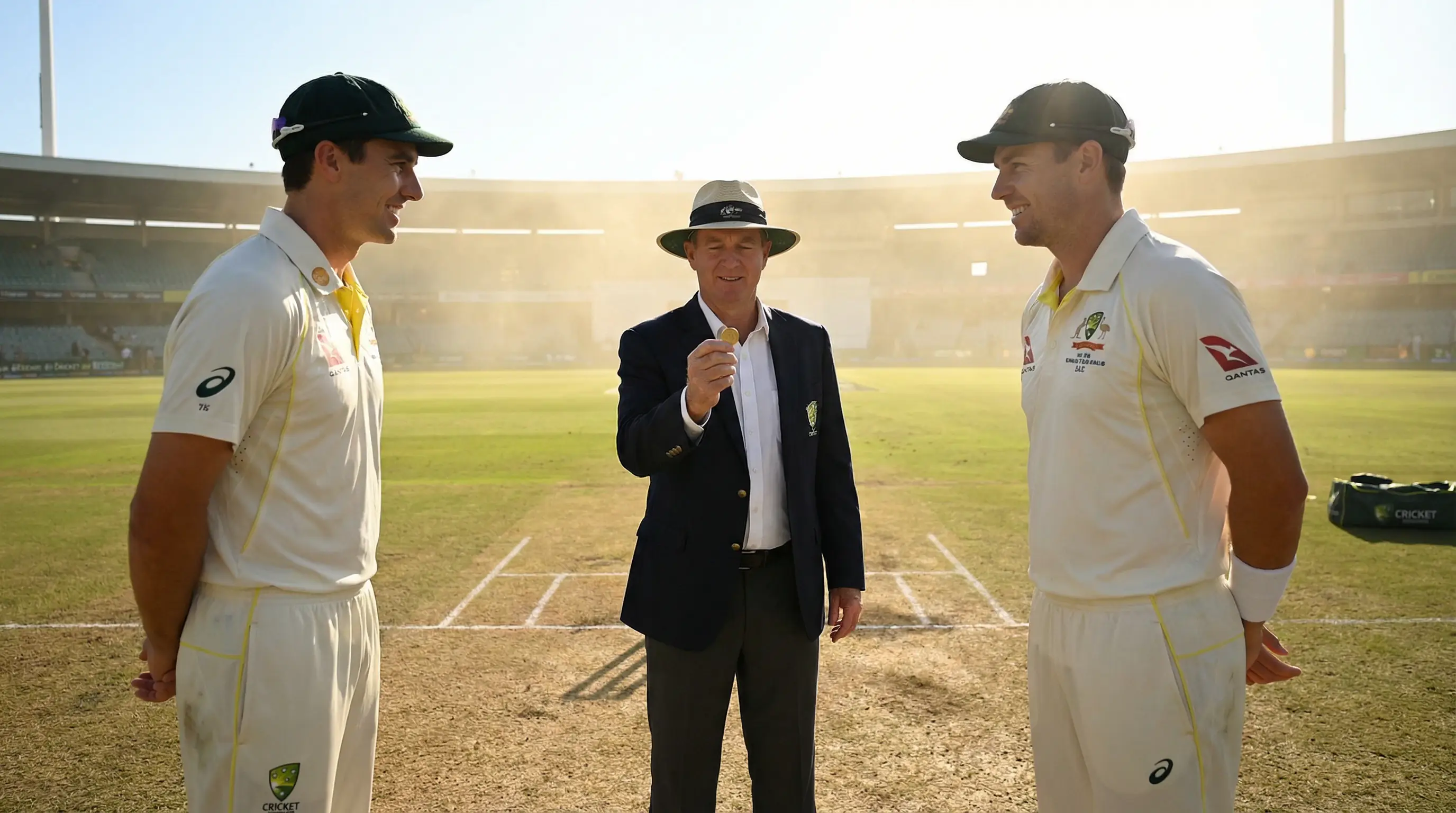
The coin toss in cricket is the only moment of pure chance in the entire match. Everything else — batting skill, bowling accuracy, fielding brilliance, tactical decisions — involves some degree of human agency. The toss is a fifty-fifty proposition, and yet its outcome can reshape the odds of a cricket match more dramatically than any other pre-play event. The question for bettors is whether that reshaping is warranted or whether the market overreacts to a coin flip.
The answer, as with most things in cricket betting, depends on context. The toss matters enormously at some venues and in some formats, barely registers at others, and its impact fluctuates with conditions that change from match to match. Understanding when the toss is a significant factor and when it is noise is a valuable skill for any cricket bettor.
Statistical Toss Advantages Across All Cricket Formats
In T20 international cricket, the team winning the toss wins the match approximately 51-53% of the time, depending on the dataset and time period analysed. This is a slim but real advantage, concentrated almost entirely in matches where the toss winner elects to bowl second. The chasing advantage in T20 cricket — bolstered by dew in evening matches and the psychological benefit of knowing the target — is the primary driver of the toss's statistical value.
In ODI cricket, the toss advantage is similar in magnitude but more venue-dependent. At grounds where conditions change significantly between the first and second innings — dew-prone subcontinental venues, for instance — the toss can swing win probability by 5-10%. At neutral or condition-stable venues, the toss advantage shrinks to near zero. Historical data from ICC tournaments shows that the toss has had a modest impact on match outcomes over large samples, but individual tournaments at specific venues can produce much larger effects.
Test cricket presents the most nuanced picture. The overall toss advantage across all Test matches is statistically modest — around 52-54% for the toss winner — but this global figure conceals massive venue-specific variation. On pitches that deteriorate significantly (India, Sri Lanka, parts of Pakistan), batting first after winning the toss can provide a win probability increase of 15-20% compared to batting second. On pitches that are stable throughout the match (Australia, most English venues in summer), the toss advantage is negligible.
The key insight from the statistical evidence is that the toss is not universally important. It is conditionally important, and the conditions that amplify its significance — pitch deterioration, dew, atmospheric changes — are identifiable before the match begins. This means you can estimate the toss's likely impact before the coin is flipped and position yourself accordingly.
Venue-Specific Toss Dynamics
Certain venues have become synonymous with toss advantage, and the data supports the reputation. The M.A. Chidambaram Stadium in Chennai has historically produced a massive advantage for the team batting first, because the pitch deteriorates rapidly under the south Indian sun and spin becomes increasingly dominant in the third and fourth innings. Teams winning the toss in Chennai elect to bat first at an overwhelming rate, and the match winner odds shift significantly after the toss.
The Narendra Modi Stadium in Ahmedabad and the Wankhede Stadium in Mumbai tell different toss stories. Ahmedabad's pitch can turn sharply from day one, making the toss decision a genuine tactical dilemma — bat first and pile up runs before conditions worsen, or bowl first and hope to exploit a fresh pitch that also offers turn. Mumbai's Wankhede is flatter and less toss-sensitive, meaning the toss adjustment should be smaller despite both venues being in India.
In England, the toss dynamic revolves around cloud cover rather than pitch deterioration. If the forecast calls for overcast skies on the first morning, the toss winner will bowl, and the statistical advantage comes from inserting the opposition in bowler-friendly conditions. If the sky is clear, the toss is far less consequential. This weather-conditional toss analysis is more valuable than a simple "toss winner wins X% of the time at this venue" approach.
Southern hemisphere venues offer their own patterns. In New Zealand, the toss is disproportionately important on green pitches where the first session seams sharply. In South Africa, the altitude at Centurion and the Wanderers creates a different calculus — the thinner air reduces swing but amplifies pace, and the toss advantage depends more on the pitch preparation than the atmospheric conditions.
The Toss Winner Market: Is There Value?
Many sportsbooks offer a direct toss winner market — a simple bet on which captain will win the coin flip. The odds are typically priced close to even money (1.90-1.95 for each side, with the bookmaker's margin baked in). Since the toss is a genuinely random event with a 50% probability for each outcome, there is no analytical edge to be found in the toss winner market itself. No amount of research into team form, pitch conditions, or historical patterns will help you predict the outcome of a coin flip.
This makes the toss winner market a pure negative-expectation bet for the bettor. The bookmaker's margin guarantees a long-term loss regardless of your selection strategy. Some bettors enjoy the toss market as a low-stakes entertainment bet, and there is nothing wrong with that, but it should never be treated as a serious component of a cricket betting portfolio.
Where the toss does offer genuine betting value is in its downstream effects. The toss result is the first piece of hard information about a match, and it triggers a cascade of market adjustments. Match winner odds shift, innings runs lines are recalibrated, and player performance markets adjust to reflect which team bats in which conditions. The bettor who has a pre-formed view on how the toss should affect these downstream markets — and who can compare that view to the market's actual adjustment — is the one who finds edge.
Using the Toss in Your Betting Strategy
The most practical application of toss analysis is not betting on the toss itself but preparing two conditional betting plans: one for each toss outcome. Before the match, assess the pitch, weather, and venue history. Determine which team is favoured if they bat first and which is favoured if they bowl first. Then, once the toss happens, compare the actual odds shift to your pre-match expectations.
This approach works because the market's toss adjustment is often either too large or too small. In matches where the toss has a genuine, significant impact — a deteriorating subcontinental pitch, an evening T20 with heavy dew — the market sometimes underadjusts because the general model does not fully capture the venue-specific effect. In matches where the toss is largely irrelevant — a flat Australian pitch with stable conditions — the market sometimes overadjusts because bettors and algorithms apply a standard toss premium regardless of context.
The window of opportunity between the toss and the first ball is narrow. In televised matches, the toss typically happens 30-45 minutes before play begins. The market moves quickly during this window, with the sharpest adjustment occurring in the first few minutes after the toss result is announced. If you have done your pre-match homework and know exactly what you want to bet on given each toss outcome, you can act in that initial window before the market reaches equilibrium. If you are still deciding after the toss, the window has probably closed.
When the Captain Gets It Wrong
One of the most interesting toss-related betting scenarios occurs when the toss winner makes what appears to be the wrong decision. If a captain wins the toss at a venue where batting first is overwhelmingly favoured and elects to bowl, or vice versa, the market will adjust based on the actual decision rather than the optimal decision. This creates a potential discrepancy between the market's pricing and the historical evidence.
Captains occasionally make contrarian toss decisions for tactical reasons — testing their bowling attack's ability to perform under pressure, shielding a fragile batting order from the best bowling conditions, or simply misreading the pitch. When these decisions go against the established pattern at a venue, the market is sometimes too respectful of the captain's judgment. The odds might shift as if the decision was well-reasoned, when in fact the historical data suggests it was a mistake. Backing the opposition in these situations is a statistically supported approach, though it requires the discipline to bet against the team that just made a deliberate tactical choice.
This scenario plays out most clearly in Test cricket, where the wrong toss decision can have consequences that compound over five days. If a captain inserts the opposition on a flat pitch and the batsmen capitalise with a 500-run first innings, the toss decision has effectively cost the bowling team the match. The pre-match odds reflected the toss winner's advantage; the actual odds should have reflected the poor decision. Recognising that gap in real time is a skill that improves with experience.
A Coin Flip with Context
The toss is simultaneously the most and least important moment in a cricket match. It is a random event that conveys no information about skill, preparation, or form — and yet its outcome can shift win probability by double digits at the right venue in the right conditions. For bettors, the toss is best understood not as a standalone market but as a catalyst that reveals whether the existing odds are correctly calibrated.
The smart approach is to treat the toss as an information event rather than a betting event. Before the match, build your analysis around pitch, weather, and team matchups. Estimate how much the toss should matter at this specific venue on this specific day. Then wait for the coin to land and compare the market's response to your estimate. When the market underreacts to a significant toss result, bet the team that just gained an underpriced advantage. When it overreacts to a toss that should not matter much, fade the movement. The coin is random. Your response to it should not be.
