 OnCricketBetting
 Women’s Cricket Betting Markets & WPL Odds
 Available in US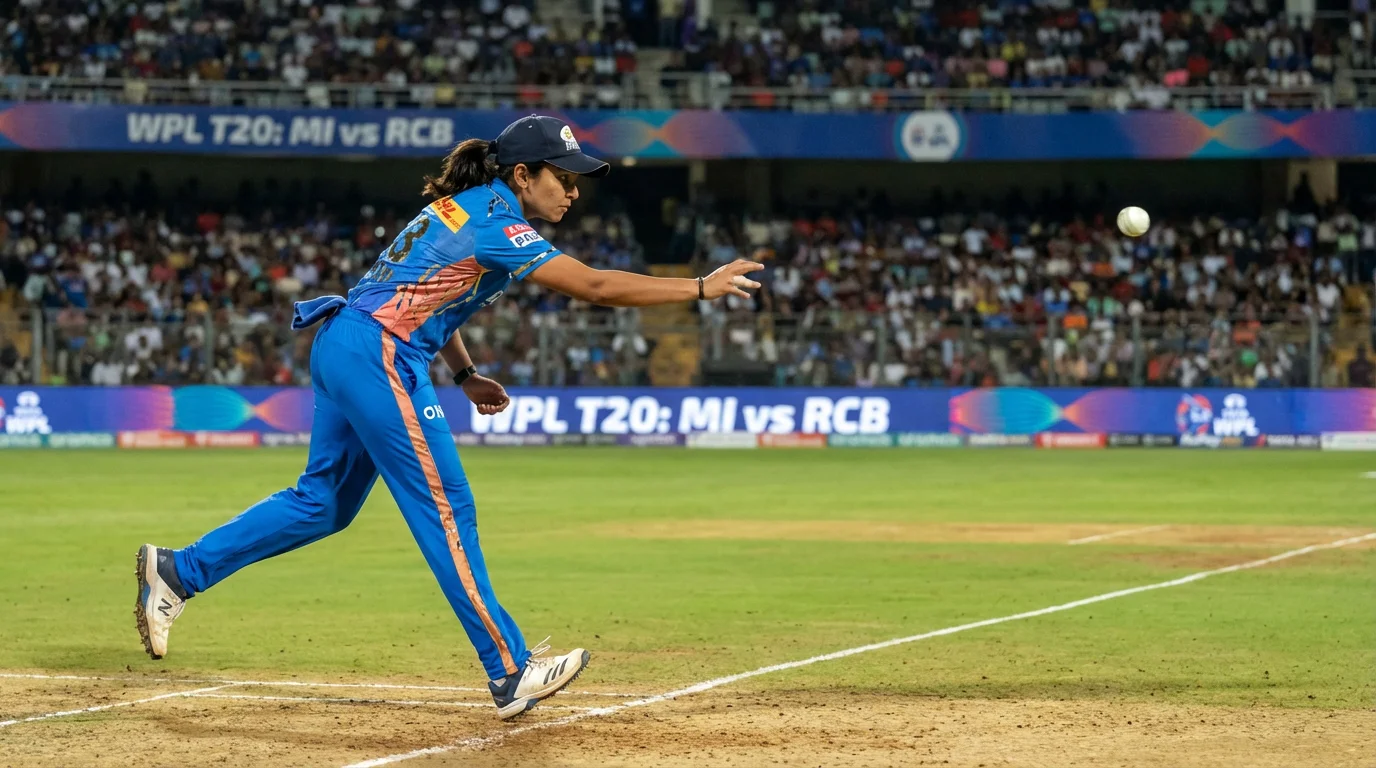
Women's cricket betting is the fastest-growing segment of the cricket wagering market, and that growth is not accidental. The Women's Premier League in India, the expansion of women's T20 World Cups, increased broadcast coverage, and the professionalisation of women's cricket across multiple countries have combined to create a betting landscape that barely existed five years ago. For bettors, this represents something genuinely rare: a market in its early development phase, where inefficiencies are abundant and the informational bar required to have an edge is far lower than in mature markets like men's IPL or international cricket.
The catch — and there is always a catch — is that the data infrastructure around women's cricket is still playing catch-up with the men's game. Historical statistics are thinner, analytical coverage is less comprehensive, and bookmaker pricing models are less refined. This is simultaneously the opportunity and the challenge: the edges are there, but finding them requires a willingness to do primary research rather than relying on pre-packaged analysis that may not exist yet.
This guide covers the key women's cricket competitions from a betting perspective, how to analyse women's cricket markets effectively, and why the bettors who invest time in this space now will be rewarded as the market matures.
The Global Women's Cricket Landscape in 2026
Women's cricket has undergone a structural transformation in recent years. The ICC has expanded the calendar, introduced standalone women's events with dedicated broadcast windows, and pushed member nations to invest in professional contracts for female players. The result is a competitive landscape that is deeper and more interesting than at any point in the sport's history.
At the international level, Australia, India, England, and South Africa form the top tier, with New Zealand, the West Indies, and Sri Lanka providing competitive opposition depending on the format and conditions. The gap between the top teams and the rest of the field is wider than in men's cricket, which has direct implications for betting — favourites win more often in women's internationals, and the match winner market is consequently less volatile. This does not mean there is no value; it means the value tends to appear in totals, player performance, and format-specific markets rather than in match winner upsets.
The domestic franchise landscape is where the most exciting growth is happening. The Women's Premier League, launched by the BCCI, has rapidly become the flagship women's cricket competition, attracting international stars and generating significant betting volume. The Women's Big Bash League in Australia remains an established competition with a loyal following and a mature betting market relative to other women's tournaments. England's The Hundred includes women's matches alongside the men's competition, and several other countries are developing or expanding women's domestic leagues.
WPL Betting: India's Women's Premier League
The WPL has transformed women's cricket betting in the same way the men's IPL transformed the broader cricket betting market — by concentrating elite talent into a short, high-profile tournament with massive viewership and consequently robust betting markets.
From a betting perspective, the WPL shares several characteristics with the men's IPL but with important differences. The talent pool is smaller, which means individual players have a larger impact on team outcomes. In the men's IPL, losing one star player to injury might reduce a team's win probability by a few percentage points; in the WPL, losing a frontline international batter or a key overseas bowler can fundamentally alter a team's competitiveness. This player dependency creates more volatile odds movements around team news and makes monitoring squad availability even more important than in the men's competition.
Pitch and venue analysis in the WPL follows the same principles as men's cricket — flat pitches produce higher totals, green surfaces assist seamers, and ground dimensions influence scoring patterns. However, the calibration is different. Scoring rates in women's T20 cricket are generally lower than in the men's game, and boundary hitting is less frequent, which means that bowler economy rates and running between the wickets play a proportionally larger role in determining totals. Over/under lines in the WPL are set lower than equivalent men's IPL matches at the same venues, and the specific thresholds require recalibration if you are used to men's cricket benchmarks.
The WPL's auction dynamics create pre-season value in outright markets. Because the league is still relatively young, franchises are refining their squad-building strategies, and some teams make auction decisions that look questionable to anyone who has studied the player pool carefully. A team that overspends on a marquee name and neglects bowling depth, for example, might be overpriced in the outright market based on star power alone. Conversely, a well-balanced squad that lacks headline names might be underpriced because the public gravitates toward recognisable players rather than structural team quality.
Women's World Cup and T20 World Cup Betting
Women's World Cup events — both the ODI World Cup and the T20 World Cup — provide concentrated betting opportunities that parallel their men's counterparts but with distinct characteristics that require adjusted strategies.
The outright market for women's World Cups is typically dominated by one or two teams. Australia's dominance in women's cricket over the past decade means they are almost always the outright favourite, often at prices shorter than 2.50. This compressed favourite pricing pushes value toward the middle of the market — teams like India, England, or South Africa that have the talent to win the tournament but are priced at 5.00 or longer because the public assumes Australia will prevail.
Group stage betting in women's World Cups offers opportunities similar to the men's game but amplified by the wider quality gap between teams. When a top-tier team faces a lower-ranked opponent, the match winner odds are often extremely short, making handicap and totals markets the more interesting options. The question shifts from "who will win" to "by how much" — and that is a question where your analysis of the specific matchup, conditions, and team motivation can provide an edge that the heavily lopsided match winner market cannot.
Knockout rounds in women's World Cups have historically produced more results that align with pre-tournament rankings than the men's equivalent. Semi-final and final upsets are rarer, partly because the talent concentration at the top of women's cricket is more extreme. This pattern has implications for outright hedging strategies — if you have backed a top-two team ante-post, the probability of reaching the knockout stage is high, and hedging opportunities will likely arise at favourable prices.
Analysing Women's Cricket Markets Effectively
The analytical approach to women's cricket betting shares the same framework as men's cricket — conditions, matchups, form, statistics — but the data landscape requires specific adaptations.
The most important adaptation is sample size awareness. Many women's cricket players have played fewer international matches than their male counterparts, which means their career statistics are based on smaller samples and are consequently less reliable as predictors. A batter with a T20 international average of 35 from 50 innings is a more stable data point than one with the same average from 15 innings. When working with small samples, regressing individual statistics toward the group mean — assuming that extreme performances will moderate over time — produces more accurate predictions than taking the raw numbers at face value.
Head-to-head records between teams are particularly useful in women's cricket because the competitive calendar is concentrated among fewer teams. The same matchups recur frequently, and teams develop specific strategies against regular opponents. India's approach to bowling against Australia, for instance, has evolved through repeated encounters, and the recent head-to-head record may be more predictive than overall form.
Bowling attack analysis deserves extra attention in women's cricket markets. The gap between the best and worst bowling attacks in women's cricket is arguably wider than in the men's game, and this gap has a direct impact on scoring levels. A team with a world-class pace bowler like Australia's or South Africa's international spearheads can suppress opposition scoring by 15-20 runs in a T20 innings compared to an average attack. This differential feeds directly into totals markets and handicap lines, and bookmakers sometimes underweight it because their models are calibrated to the smaller bowling differentials seen in men's cricket.
Social media and dedicated women's cricket journalism are invaluable resources for building the informational foundation that betting in this space requires. Journalists covering the WPL, WBBL, and women's internationals often provide team news, injury updates, and tactical insights that are not available through mainstream cricket coverage. Following these specialists gives you access to information that the broader betting market may not have incorporated, which is the definition of an informational edge.
The Market That Rewards the Early Movers
Women's cricket betting in 2026 looks a lot like men's cricket betting looked fifteen years ago — a market with real inefficiencies, limited analytical coverage, and bookmaker models that are still being refined. The bettors who treat it as a secondary afterthought are making the same mistake that people made when they dismissed T20 cricket as a gimmick or ignored the IPL's first few seasons. Markets mature. Coverage deepens. Models improve. The edges that exist today — the pricing gaps created by thin data, the informational advantages available to anyone willing to watch the games and track the players — will narrow as the market grows. The time to build expertise in women's cricket betting is now, while the barriers to entry are low and the rewards for genuine knowledge are disproportionately high. By the time the rest of the market catches up, the early movers will already have their edge embedded in experience that cannot be replicated by reading a single guide.
