 OnCricketBetting
 Cricket Betting Markets & Wager Types Explained
 Available in US
Cricket betting has evolved far beyond simply picking which team will win a match. Modern bookmakers offer dozens of markets for every fixture, allowing bettors to wager on everything from the obvious match outcome to the obscure method by which the third wicket will fall. This proliferation of options creates opportunities for those who understand what each market offers and challenges for those overwhelmed by the sheer variety available. Navigating this landscape requires systematic knowledge of how different markets function and where value tends to hide.
The expansion of cricket betting markets reflects both technological advancement and growing demand from sophisticated bettors. Live data feeds enable bookmakers to offer markets that would have been impossible to price accurately just a decade ago. Meanwhile, bettors seeking edges have pushed beyond basic match winner bets into specialized propositions where their cricket knowledge might provide genuine advantage. The result is an ecosystem where casual fans can still place simple bets while dedicated analysts can construct complex positions across multiple related markets.
Understanding the full range of available markets serves multiple purposes. Most obviously, it expands your betting options beyond the heavily traded match winner market where bookmaker margins are lowest but competition from sharp bettors is highest. Less obviously, understanding how different markets relate to each other reveals arbitrage opportunities and hedging possibilities that single-market bettors miss entirely. A bettor who understands both match winner and top batsman markets can identify situations where these markets imply contradictory probabilities.
This guide systematically covers the major categories of cricket betting markets, explains how each functions, and offers guidance on when particular markets might offer value. The goal is not to tell you which bets to place but to ensure you understand what you are betting on when you do place them. Cricket betting rewards knowledge, and market knowledge forms one essential component of the broader analytical toolkit successful bettors develop.
Match Outcome & Overall Winner Markets
Match Winner
The match winner market asks the most fundamental question in cricket betting: which team will win this match? In limited-overs cricket, this market offers two outcomes with the possibility of a tie typically handled through dead-heat rules or super over resolution. In Test cricket, the draw becomes a third possible outcome, fundamentally changing how the market functions and how bettors should approach it.
Once you grasp the basic match winner odds, you can explore more specific wagers by understanding how cricket prop bets work in various formats.

Pricing in match winner markets reflects bookmaker assessment of each team's winning probability, adjusted for their desired margin. If a bookmaker believes Team A has a 60% chance of winning and Team B has a 40% chance, they might offer odds implying 63% and 43% respectively, with the extra 6% representing their margin. Understanding this margin structure helps bettors recognize when odds genuinely offer value versus when they merely appear attractive while still favoring the bookmaker.
Match winner markets attract the highest betting volume and consequently the most sophisticated pricing. Bookmakers devote significant resources to pricing these markets accurately because errors here cost them the most money. For bettors, this means finding genuine edge in match winner markets requires either superior information or superior analysis compared to both the bookmaker and other sharp bettors who are also seeking value. Many successful bettors conclude that their edge lies elsewhere and use match winner markets primarily for hedging positions established in less efficient markets.
Draw No Bet
Draw no bet removes the draw outcome from consideration by refunding all stakes if the match ends in a draw. This market exists primarily for Test cricket, where draws occur frequently enough to represent genuine risk. In exchange for this protection, bettors receive lower odds on their chosen team than the standard match winner market would offer. The reduction reflects the probability of a draw, which bettors are essentially buying insurance against.
The value proposition of draw no bet depends on your assessment of draw probability relative to the odds reduction. If you believe a draw is more likely than the market implies, standard match winner odds offer better value because you are being overcompensated for accepting draw risk. If you believe a draw is less likely than implied, draw no bet makes sense because you are paying relatively little for protection you probably will not need. This analysis requires explicit draw probability estimation rather than simply accepting whatever protection the market offers.
Draw no bet also functions as a risk management tool independent of expected value calculations. Bettors who have strong conviction about which team will win if a result occurs, but uncertainty about whether conditions will permit a result, might reasonably accept the odds reduction for psychological comfort. Betting is not purely mathematical; managing your own emotional responses to outcomes legitimately factors into strategy.
Double Chance
Double chance markets allow betting on two of three possible outcomes simultaneously: Team A or draw, Team B or draw, or Team A or Team B (either team wins). The third variant effectively excludes only the draw, making it similar to backing both teams in a two-way market at reduced odds. These markets provide another mechanism for managing draw risk while maintaining exposure to match outcomes.
The Team A or draw variant suits situations where you believe Team A is likely to win but conditions or match situations make a draw plausible. You sacrifice potential returns if Team A wins outright but gain protection against the draw. The pricing should reflect the combined probability of your two covered outcomes, minus the bookmaker's margin. Comparing these prices against your own probability estimates reveals whether the market offers value.
Double chance markets see less trading volume than match winner markets, which can create pricing inefficiencies. Bookmakers may not adjust these markets as frequently or accurately in response to changing conditions. During Test matches where weather or pitch deterioration significantly affects draw probability, double chance prices sometimes lag behind these developments, creating windows of opportunity for attentive bettors.
Player Performance Markets
Top Batsman
Top batsman markets reward the highest individual scorer within a defined scope, either within one team's innings, across both teams' innings, or throughout an entire match. When multiple batsmen tie for highest score, most bookmakers apply dead-heat rules that divide the payout proportionally among tied winners. Understanding exactly what scope your chosen market covers prevents confusion about which performances qualify.
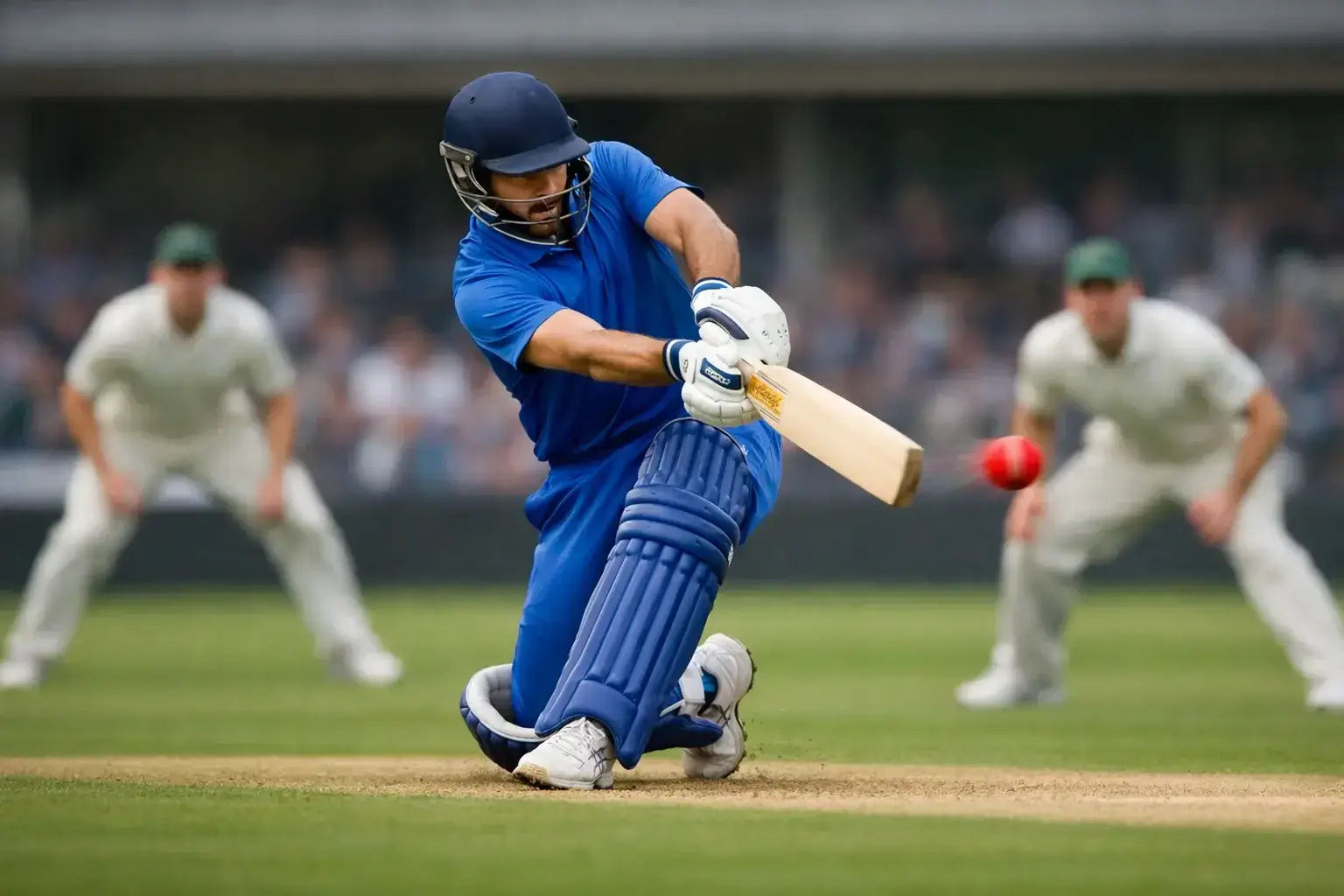
Batting position significantly influences top batsman probabilities. Openers face more deliveries than middle-order batsmen under normal circumstances, giving them structural advantages in accumulating runs. However, this advantage is priced into the market, often making middle-order batsmen better value when match situations suggest they will face substantial deliveries. Collapse scenarios where openers fall cheaply and middle-order batsmen rebuild represent situations where the standard positional advantages reverse.
Form and matchup analysis matters enormously in top batsman markets. A batsman in excellent form against a bowling attack that suits their strengths offers different value than their raw statistics suggest. Conversely, a statistically strong batsman facing bowlers who have historically troubled them may be overpriced based on reputation. The relatively lower trading volume in player markets compared to match markets means these nuances may not be fully reflected in prices.
Top Bowler
Top bowler markets reward the bowler taking the most wickets within the defined scope, with dead-heat rules typically applying when bowlers tie. Unlike batting, where runs provide a continuous measure, wickets are discrete events that create lumpier distributions. A bowler might take five wickets or none, with relatively little middle ground, making top bowler outcomes harder to predict than top batsman results.

Bowling role affects wicket-taking opportunities in ways bettors must consider. Opening bowlers with the new ball often have the best chance of taking wickets early when the ball moves most. Death bowlers face batsmen taking risks, generating both boundaries and wickets. Middle-overs bowlers, particularly spinners in conditions that do not assist them significantly, may bowl economically without taking many wickets. Matching bowler roles to likely match conditions identifies where value might exist.
Wicket-taking bowlers differ from economical bowlers, and this distinction matters for top bowler betting. Some bowlers consistently take wickets while conceding runs; others rarely take wickets but maintain pressure through economy. The top bowler market rewards wickets regardless of economy, meaning aggressive bowlers who generate chances become attractive even if their runs-per-over figures look less impressive than more defensive options.
Player Runs and Wickets Over/Under
Individual player over/under markets set lines for specific batsmen's runs or specific bowlers' wickets, allowing bettors to take positions on individual performances without competing against the entire field as in top batsman or top bowler markets. These markets test your assessment of individual performance levels rather than relative performance against teammates.
For batting over/under markets, the line typically reflects the player's expected runs given their recent form, the opposition bowling, and match conditions. If a bookmaker sets a batsman's line at 35.5 runs, they believe there is roughly equal probability of the batsman scoring more or fewer than 35.5. Your edge comes from disagreeing with this assessment based on factors the bookmaker may have underweighted.
Bowling wicket lines usually sit at lower numbers given the discrete nature of wickets. A line of 1.5 wickets asks whether a bowler will take two or more wickets, a relatively high bar in matches where wickets are shared among the bowling attack. These markets require assessing not just the bowler's quality but their likely workload, as bowlers who bowl more overs have more opportunities to take wickets regardless of skill level.
Man of the Match
Man of the match markets ask bettors to predict which player will receive the official award for outstanding performance. These markets introduce subjectivity because the award is determined by judges rather than pure statistics. A batsman scoring 80 in a winning chase might beat a bowler taking four wickets in a losing cause, even if the statistical contributions seem comparable.
Winning team bias affects man of the match awards significantly. Selectors typically choose players from the winning team unless a losing player's performance was truly exceptional. This means man of the match betting effectively requires predicting both the match winner and the outstanding performer from that team. The compounded uncertainty makes these markets particularly challenging to beat.
All-rounders who contribute with both bat and ball sometimes receive man of the match awards for combined contributions that individually would not stand out. A player scoring 40 and taking two wickets might beat teammates who scored 70 or took three wickets because the combined contribution seems more valuable. Understanding how selectors weigh different contribution types helps assess all-rounder value in these markets.
Team and Innings Markets
Total Runs Over/Under
Total runs markets set a line for combined scoring in a match or specific innings, asking bettors whether the actual total will exceed or fall below that number. In limited-overs cricket, these markets might cover first innings totals, second innings totals, or combined match totals. The lines adjust based on venue characteristics, team strengths, and expected conditions.
Venue analysis provides the foundation for total runs assessment. Some grounds consistently produce high-scoring matches due to short boundaries, true pitches, and fast outfields. Others suppress scoring through larger dimensions, pitches offering movement, or atmospheric conditions assisting swing bowling. Historical venue data gives a baseline expectation that bettors then adjust for the specific teams and conditions involved.
Pitch conditions on match day matter more than historical averages. A venue known for high scoring might produce a low-scoring match if the pitch has been prepared differently or weather conditions favor bowling. Bettors with access to reliable pitch reports or the ability to assess conditions from pre-match footage can identify situations where the market's venue-based expectations may be wrong.
Innings Runs for Specific Teams
Individual team innings runs markets narrow the focus from combined totals to what one specific team will score. These markets allow taking positions on team-specific factors without needing to assess the other team's likely scoring. If you have strong views about one team's batting or the other team's bowling but uncertainty about the reverse, these markets let you express that partial view.
Matchup analysis drives innings runs assessment. A strong batting lineup facing a weak bowling attack should score more than the same lineup against premium bowlers. But the relationship is not purely additive: batting lineups have ceilings based on overs available and their own limitations, while weak bowling attacks can still restrict scoring if conditions assist them. Understanding these interaction effects improves innings runs predictions.
First versus second innings considerations affect these markets differently. First innings totals are set without knowledge of what target will be required, while second innings in chases are constrained by the target itself. A team chasing 150 cannot score 200 even if they are capable of it; they will likely finish around 151-153 if successful. This target-constraining effect must factor into second innings total assessments.
Partnership Markets
Partnership markets allow betting on runs scored during specific partnerships, typically the opening partnership or the partnership in progress at any given time. These markets test assessment of the specific batsmen involved rather than overall team batting strength. Two technically solid openers might produce larger opening partnerships than more aggressive but less consistent alternatives.
Opening partnership markets resolve relatively early in innings, providing quick results that appeal to some bettors. The dynamics differ from other partnership positions because openers face the new ball when it moves most and bowlers are freshest. Understanding how specific openers handle new ball challenges against specific bowling attacks informs opening partnership predictions.
Later partnership markets become available during live betting as new batsmen arrive at the crease. These markets require rapid assessment of the incoming batsman, the remaining batsman's form and fatigue, and remaining bowling quality. The pricing of these markets during live betting may lag behind accurate assessment of these factors, creating opportunities for those who can analyze quickly.
Specialized Markets
Toss Winner
The toss winner market offers pure 50-50 odds (minus bookmaker margin) on which captain will win the coin toss. In theory, this market should be impossible to beat because toss outcomes are genuinely random. In practice, the bookmaker margin means you lose money over time betting on tosses regardless of which side you choose.
Some bettors believe certain captains are lucky or have developed toss-winning tendencies. Statistical analysis does not support these beliefs; captains who have won many tosses have simply experienced positive variance rather than demonstrating skill. Betting on toss winners based on perceived luck patterns represents pure gambling rather than analytical betting.
The toss winner market's primary value lies in conditional betting strategies. Some bettors wait for toss results before placing match bets, particularly at venues where toss advantage is significant. Others use toss results to inform live betting positions immediately after the toss but before play begins. These approaches use toss information strategically rather than betting on the toss itself.
First Wicket Method
First wicket method markets ask how the first wicket of an innings will fall: caught, bowled, LBW, run out, or other methods. These markets require understanding how bowling attacks typically take wickets and how batting lineups typically lose them. Seam-heavy attacks generate more caught-behind and slip catches; spin-heavy attacks produce more LBW and caught-at-short-leg dismissals.
Caught represents the most common first wicket method across most conditions and matchups, typically accounting for 50-60% of dismissals. Within the caught category, the split between catches by the wicketkeeper and catches by fielders varies based on bowling type. New ball seam bowling generates more edges to the keeper; spin generates more catches to close fielders.
Run out first wickets occur rarely enough that some bookmakers offer attractive odds on this outcome. However, the odds must compensate for genuine rarity rather than simply appearing generous. Run outs become slightly more common in limited-overs cricket where running between wickets is more aggressive, but even then represent a small percentage of first wicket dismissals.
Sixes and Boundaries Markets
Markets on total sixes, individual player sixes, or total boundaries expand betting options beyond runs to the style of scoring. These markets appeal to bettors who can assess power-hitting matchups separately from overall run-scoring expectations. A match might produce moderate runs but many sixes if batting conditions favor hitting over accumulation.
Ground dimensions affect boundary expectations significantly. Small grounds with short straight boundaries produce more sixes than larger venues where the same shots would be caught on the rope. Fast outfields encourage running boundaries while slow outfields make struck boundaries proportionally more important. Matching venue characteristics to the batting lineups involved improves boundary-related predictions.
Individual six-hitting markets require player-specific analysis. Some batsmen accumulate runs without emphasizing maximums; others hit sixes frequently regardless of match situation. Understanding these stylistic differences and how they interact with specific bowling identifies where individual sixes markets might offer value compared to the broader total sixes market.
Century and Milestone Markets
Century markets ask whether any batsman will score 100 runs in specified innings or matches. Half-century markets lower the threshold to 50 runs. These milestone markets combine assessment of batting conditions with evaluation of whether any individual is likely to bat long enough and well enough to reach the threshold.
Century probability depends heavily on format. Test cricket provides enough time for patient accumulation, making centuries more common than in limited-overs formats where innings are constrained. T20 cricket rarely produces centuries; the format's 120-ball maximum per innings requires exceptional strike rates to reach three figures. ODI cricket falls between, with centuries achievable but requiring sustained excellence.
Milestone markets in limited-overs cricket require identifying batsmen likely to bat deep into innings. Openers who can anchor innings while accelerating later offer the best century chances because they face the most deliveries. Middle-order batsmen rarely face enough balls to reach centuries even when batting brilliantly. This structural consideration often makes favorite openers better value than their odds suggest relative to middle-order options.
Format-Specific Markets
Test Cricket Exclusive Markets
Test cricket's five-day duration enables markets that shorter formats cannot support. Session betting allows wagering on runs scored or wickets fallen during specific two-hour periods. Day winner markets ask which team will emerge ahead after each day's play. Series markets allow betting on overall series outcomes across multiple matches.

Draw-related markets assume particular importance in Tests. In addition to standard match winner with draw, bookmakers offer markets on whether any result will occur, specific draw scenarios, and timing of potential results. These markets become increasingly interesting as matches progress and draw probability fluctuates based on runs scored, wickets fallen, and time remaining.
Follow-on markets ask whether the team batting second will score enough to avoid being asked to bat again immediately. The follow-on threshold sits at 200 runs in most Tests, meaning the bowling team must establish a 200-run lead to enforce follow-on. Betting on follow-on requires assessing both teams' likely first-innings totals relative to this threshold.
Limited-Overs Specific Markets
T20 and ODI cricket enable fast-resolution markets that Test cricket's pace cannot support. Super over markets become relevant when ties occur, asking which team will win the tiebreaker. Powerplay markets focus on scoring during the fielding restriction periods that create distinct phases within limited-overs innings.
Highest scoring over markets in T20 cricket ask which over will produce the most runs, typically with favorites being death overs when batsmen swing freely. Lowest scoring over markets conversely identify which over will produce fewest runs, often the first over when batsmen are cautious or the final over of tight chases when bowlers execute well under pressure.
Tournament-specific markets for leagues like the IPL include season-long propositions: overall winner, top run-scorer across the tournament, top wicket-taker across the tournament, and whether specific statistical thresholds will be breached during the competition. These markets require assessment across many matches rather than single-fixture analysis.
How to Choose the Right Market
Matching Markets to Your Analysis
Different markets reward different types of analytical insight. Match winner markets reward understanding of overall team quality and match conditions. Player markets reward detailed knowledge of individual capabilities and matchups. Total runs markets reward venue and conditions analysis. Selecting markets that align with your analytical strengths focuses your betting where your edge is most likely to exist.

If your cricket knowledge centers on particular players whose games you have studied deeply, player performance markets offer natural opportunities to exploit that knowledge. If your strength lies in understanding how pitches behave at specific venues, totals and partnership markets let you express that insight. Self-awareness about your actual analytical capabilities prevents wasting edge on markets where you have no real advantage.
Avoid the temptation to bet on markets simply because they exist. The proliferation of betting options does not mean you should have opinions on all of them. Disciplined market selection based on genuine analytical edge outperforms scattered betting across many markets where your analysis is no better than the bookmaker's pricing.
Managing Correlation Between Markets
Multiple bets on the same match often have correlated outcomes. Backing Team A to win and their opener as top batsman creates overlapping exposure: if Team A wins through their opener's big score, both bets win, but if Team A loses, the opener probably did not top-score either. Understanding these correlations prevents inadvertently concentrating risk through seemingly diverse positions.
Hedging across related markets can manage risk when you have strong views on some aspects but uncertainty on others. You might back a team to win while also backing an opposition player for top batsman if you believe that player offers value regardless of match outcome. These structured positions express nuanced views better than simple match winner bets alone.
Building complementary positions across markets requires understanding how the markets interact mathematically. If top batsman odds imply certain run-scoring distributions and match winner odds imply certain scoring patterns, these implications should be consistent. When they are not, either one market is mispriced or your analysis of the situation is missing something. Either way, the discrepancy deserves investigation.
Conclusion
The breadth of cricket betting markets available today offers both opportunity and complexity. Match outcome markets provide the simplest betting experience but face the most efficient pricing. Player performance markets reward specialist knowledge but require deeper research. Team and innings markets test conditions assessment while specialized markets cater to specific analytical niches. Understanding this landscape helps bettors identify where their particular insights might translate to profitable opportunities.
Market selection should follow from honest assessment of your analytical strengths rather than from attraction to exotic options. The bettor who deeply understands pitch conditions might find consistent edge in totals markets while struggling to beat player markets where their knowledge is shallow. Conversely, the bettor who has studied particular players extensively might profitably specialize in player propositions while accepting that match winner markets are too efficiently priced for their level of analysis.
Whatever markets you choose to focus on, understanding how they work mechanically prevents costly errors. Dead-heat rules, scope definitions, and settlement terms vary across markets and bookmakers. Reading terms carefully before betting protects against unpleasant surprises when positions settle differently than expected. Knowledge of market mechanics combined with cricket knowledge creates the foundation for informed betting, regardless of which specific markets you ultimately choose to trade.
For the most accurate odds and comprehensive guides, always refer to our trusted online cricket betting platform before placing your stakes.
