 OnCricketBetting
 Test vs ODI vs T20 Cricket Betting Formats
 Available in US
Cricket offers bettors something no other major sport can match: three fundamentally different formats of the same game, each with distinct rhythms, strategies, and betting dynamics. A Test match unfolds across five days with the possibility of a draw; an ODI compresses the action into a single day with 100 overs of cricket; a T20 delivers explosive entertainment in roughly three hours. These are not minor variations but entirely different games that happen to share the same basic rules and equipment.
For bettors, this diversity creates both opportunity and complexity. The analytical approaches that succeed in T20 betting may fail completely when applied to Test cricket. The patience required for Test match betting would miss countless opportunities in the rapid-fire T20 environment. Understanding these format differences is not optional for serious cricket bettors; it is foundational. You cannot develop effective strategies without first understanding what makes each format unique.
The question of which format to bet on has no universal answer. Some bettors thrive in the high-variance world of T20 cricket, where fortunes swing on single overs and quick decisions generate immediate results. Others prefer the chess-like patience of Test cricket, where analysis can unfold over days and the draw adds strategic complexity absent from limited-overs formats. Still others find ODI cricket's middle ground ideal, combining enough time for patterns to emerge with enough urgency to maintain engagement.
This guide examines each format in depth, exploring the characteristics that define betting dynamics, the markets unique to each format, and the strategies that tend to succeed. The goal is not to declare one format superior but to help you understand which format aligns with your analytical strengths, risk tolerance, and betting preferences. Informed format selection may prove more valuable than any individual betting tip.
Test Match Betting Strategies & Metrics

Format Characteristics That Shape Betting
Test cricket stands alone as the only format where a draw represents a legitimate third outcome rather than an aberration requiring tiebreakers. This fundamental difference reshapes every aspect of betting analysis. A team that would be heavy favorites in limited-overs cricket might face genuine draw probability in Tests due to weather forecasts, pitch characteristics, or the simple mathematics of limited playing time. Bettors who ignore draw probability in Test betting consistently misprice matches.
The five-day duration creates evolving conditions that shorter formats cannot replicate. Pitches deteriorate as matches progress, typically offering more assistance to spin bowlers on days four and five than on day one. Weather can eliminate entire sessions or days, fundamentally altering what results remain possible. The team batting last often faces the most challenging conditions, making the toss and first-innings performance particularly significant. These temporal dynamics require thinking across days rather than just individual sessions.
Scoring rates in Test cricket average significantly lower than in limited-overs formats because batsmen face no artificial pressure to accelerate. A Test batsman can occupy the crease for hours, grinding down bowling attacks through patience and technique. This slower pace means individual sessions can pass with relatively little change in match position, testing bettors' patience but also providing time for thorough analysis between betting opportunities.
Test cricket's longer duration also means team selection emphasizes endurance over explosive impact. Bowlers must be capable of sustained spells across multiple days. Batsmen must possess the technique and concentration to survive extended periods at the crease. All-rounders become particularly valuable because they contribute across the match's full duration. These selection pressures create different player valuations than shorter formats where specialists can deliver match-winning contributions in brief appearances.
Unique Markets in Test Betting
The draw market transforms Test betting into a three-way proposition fundamentally different from limited-overs betting. Pricing draws accurately requires assessing weather forecasts, pitch deterioration rates, both teams' batting depth, and historical venue data about result frequency. Many bettors underestimate draw probability, particularly in matches between evenly-matched teams or at venues known for flat pitches and drawn results.
Session betting allows wagering on outcomes within defined periods, typically the morning, afternoon, and evening sessions that structure each day's play. These markets ask whether batting or bowling dominated a particular session, how many runs were scored, or how many wickets fell. Session markets enable betting engagement throughout the match without requiring predictions about ultimate outcomes that remain days away.
First innings lead markets capture the strategic importance of establishing dominance early in Test matches. The team that posts a large first-innings total often controls the match thereafter, either enforcing follow-on if the lead exceeds 200 runs or batting again to set an imposing target. Betting on first-innings leads requires assessing both teams' likely first-innings totals, which depends on batting quality, bowling attacks, and how the pitch is expected to play early versus later.
Series markets extend beyond individual matches to ask which team will win a multi-match Test series. These markets offer different analytical challenges, requiring assessment of squad depth, home advantage across multiple venues, and how teams might adjust strategies as a series progresses. Series betting rewards those who can think beyond single matches to tournament-level narratives.
Strategies for Test Match Betting
Patience proves essential for Test betting success. Matches develop across days, and premature betting based on early sessions often proves misguided. The team that dominates day one might face conditions favoring their opponents on days three and four. Waiting for sufficient information before committing significant stakes, while remaining alert to value opportunities as they emerge, balances engagement with analytical discipline.
Weather monitoring should be continuous throughout Test matches. Rain delays do not merely pause play; they reshape what results remain achievable given remaining time. A match heading toward a likely result might become a probable draw if weather eliminates an expected day's play. Conversely, forecasts suggesting clear weather might make aggressive result betting more attractive. Weather information is publicly available; the analytical challenge is incorporating it accurately into probability assessments.
Pitch reading determines much of Test match betting success. Understanding how pitches at different venues typically behave, and how the specific pitch being used appears to be playing, informs expectations about scoring rates, likely results, and which bowling types will prove most effective. Bettors who can assess pitch conditions from broadcast footage or reliable reports gain advantages over those relying solely on venue averages.
Draw probability assessment deserves particular analytical attention because many bettors neglect it. Ask explicitly: what would need to happen for this match to end in a draw? Is that sequence of events plausible given current match state, weather, and pitch conditions? If draw probability seems higher than implied odds suggest, draw betting offers value. If it seems lower, match winner betting becomes more attractive.
Best Test Tournaments for Betting
The Ashes series between England and Australia generates enormous betting interest and typically efficient markets but also extensive analysis and coverage that inform betting decisions. The historical rivalry creates emotional intensity that can occasionally lead to mispricing when patriotic betting volumes distort odds. Matches are played at iconic venues with well-documented pitch characteristics.
The World Test Championship has added structure to Test cricket, with teams earning points across series that determine finalists for a championship match. This competition creates additional betting markets around qualification and standings while making previously obscure bilateral series more meaningful. The Championship final itself generates significant betting interest as a one-off showcase match.
India-Australia and India-England series attract massive betting volumes given the large cricket fan bases involved. These series often feature contrasting conditions between home and away legs, testing teams' adaptability and creating betting opportunities around home advantage assessments. The quality of competition typically ensures closely contested matches.
ODI Betting Deep Dive
Format Characteristics That Shape Betting
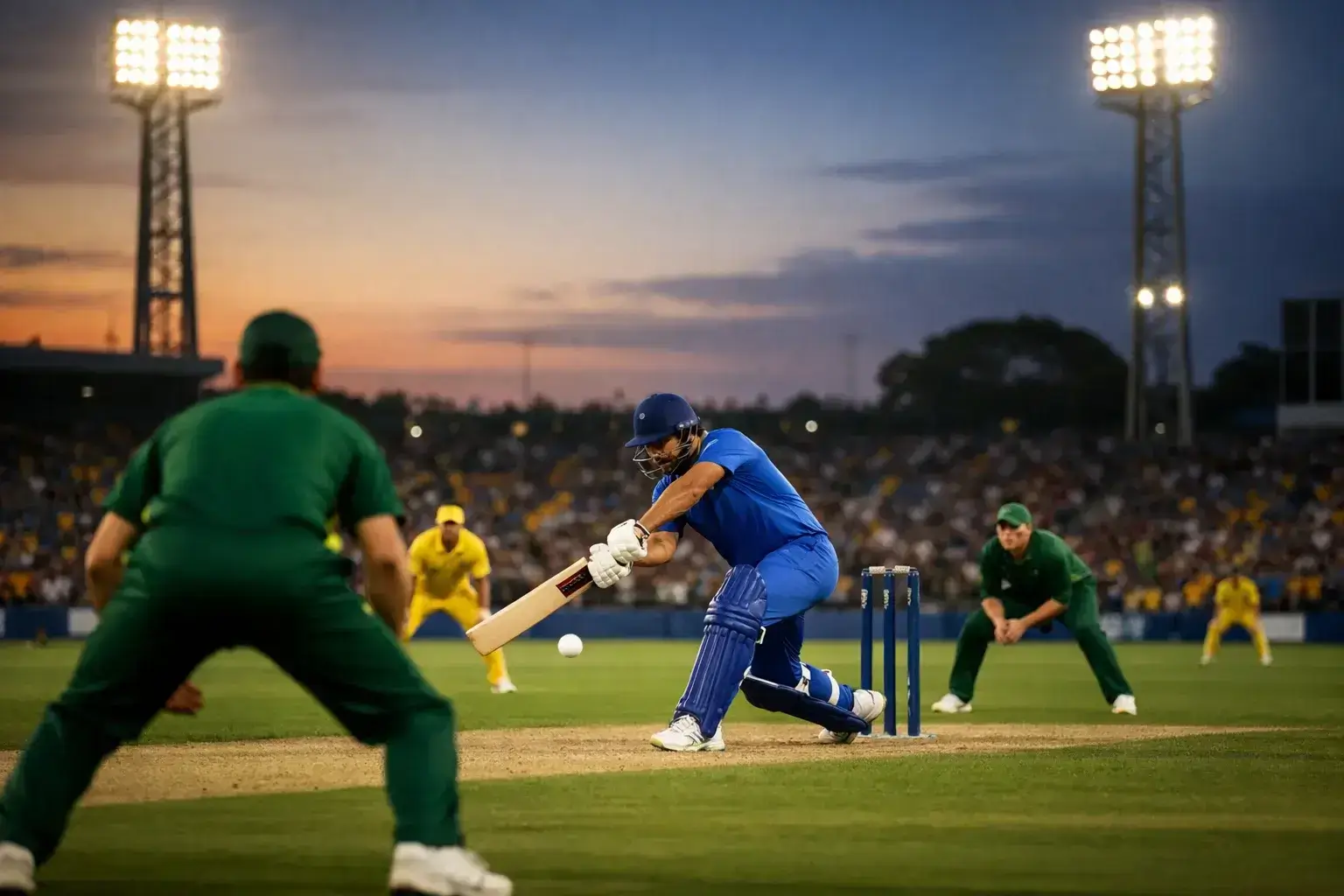
One Day International cricket constrains both teams to 50 overs each, creating matches that typically complete within a single day. This limitation eliminates draws from normal consideration, though ties can occur and are resolved through super overs in knockout matches. The two-outcome structure simplifies betting compared to Tests while maintaining enough duration for meaningful patterns to emerge.
The 50-over structure creates distinct phases that shape scoring patterns. Powerplay overs with fielding restrictions enable aggressive batting early. Middle overs often see consolidation as teams balance wicket preservation against run accumulation. Death overs feature acceleration as teams push for maximum totals or chase targets with urgency. Understanding these phases and how specific teams approach them informs betting analysis.
Scoring rates in ODI cricket typically range between 5 and 7 runs per over depending on conditions and team approaches, substantially higher than Test cricket but lower than T20. This moderate pace allows for recovery from poor starts while still punishing prolonged failures. A team losing early wickets can rebuild through the middle overs; a team coasting through middle overs must accelerate in the death overs to post competitive totals.
Team composition in ODI cricket balances the competing demands of batting depth and bowling variety. Most teams field five specialist bowlers alongside a batting lineup extending to number seven or eight. All-rounders who can contribute meaningfully with both bat and ball become particularly valuable given the 50-over workload distributed across the bowling unit.
Key Markets in ODI Betting
Match winner markets dominate ODI betting, offering straightforward two-way betting on which team will win. Unlike Test cricket, there is no draw outcome to complicate analysis, making probability assessment somewhat simpler. However, the single-match format introduces variance that can see underdogs prevail more frequently than their underlying quality suggests.
Total runs markets ask whether combined scoring will exceed or fall below specified lines, typically set between 550 and 650 for full matches depending on venue and conditions. These markets test assessment of pitch behavior, boundary dimensions, and both teams' batting capabilities without requiring prediction of which team will win.
Innings runs markets narrow focus to individual team performance, asking whether a specific team will exceed or fall below a runs threshold. First-innings markets require pure batting assessment; second-innings markets must account for target constraints and chasing dynamics. A team chasing 280 cannot score 350 even if capable of it, affecting how these markets settle.
Top batsman and top bowler markets function similarly to other formats but with ODI-specific considerations. The 50-over format provides more opportunity for batsmen to build large scores than T20 but less than Tests. Bowlers typically deliver 10 overs maximum, constraining wicket-taking opportunities compared to Tests where workloads are higher.
Strategies for ODI Betting
Chase analysis provides an analytical edge in ODI betting. Historical data reveals that chasing teams win slightly more often than teams batting first across most conditions, though this varies by venue and era. More importantly, understanding how specific teams perform while chasing versus setting targets identifies situations where odds may not fully reflect demonstrated abilities or weaknesses.
Toss impact varies significantly by venue and conditions, making blanket assumptions dangerous. At some grounds, teams consistently prefer batting first to set targets; at others, chasing under lights offers significant advantages due to dew affecting bowling grip. Learning venue-specific toss preferences helps assess how toss outcomes should affect match winner probabilities.
Middle-overs analysis receives less attention than powerplay or death-over performance but often proves decisive in ODI outcomes. Teams that maintain momentum through overs 15-40 without losing wicket clusters position themselves for strong finishes. Conversely, teams that stagnate or lose quick wickets in this phase rarely recover fully. Identifying teams with strong or weak middle-overs capabilities reveals opportunities the market may underweight.
Tournament context affects ODI betting in ways isolated matches do not. In World Cup group stages, teams may rest key players for less critical matches or experiment with lineups. In knockout matches, pressure intensifies and experience becomes more valuable. Recognizing how tournament stage affects team performance helps calibrate expectations appropriately.
T20 Betting Deep Dive

Format Characteristics That Shape Betting
Twenty20 cricket compresses the entire contest into approximately three hours, with each team facing just 120 legal deliveries. This extreme compression creates volatility that fundamentally distinguishes T20 betting from longer formats. A single explosive over can swing match odds dramatically; a brief batting collapse can transform a winning position into defeat. Bettors must accept this volatility as inherent rather than fighting against it.
Scoring rates in T20 cricket typically exceed 8 runs per over and frequently approach 10 or more in favorable conditions. This offensive orientation means batsmen swing aggressively from the start, accepting higher dismissal risk in pursuit of rapid scoring. The format rewards power hitting over technical defense, reshaping which player attributes matter most compared to longer formats.
The condensed duration means individual performances have outsized match impact. A single batsman scoring 80 from 50 balls might contribute half their team's total. A bowler taking three wickets in two overs can single-handedly change the match trajectory. This individual impact concentration makes player-specific analysis particularly valuable for T20 betting compared to longer formats where team depth matters more.
Team composition in T20 cricket emphasizes specialists who excel in specific roles: aggressive openers, middle-order finishers, death bowlers, and powerplay specialists. All-rounder value increases further because limited overs mean teams cannot afford passengers who contribute in only one discipline. Bowling attacks often include variations specialists who can confuse batsmen with different deliveries rather than relying on sustained pace or spin.
High-Volatility Opportunities
Powerplay betting in T20 matches offers frequent opportunities because these six overs occur in every match and produce dramatic variance. Teams might score 60 without loss or 30 for three off identical overs depending on how the contest unfolds. Understanding which openers thrive against specific bowling types, and which bowling attacks struggle in powerplay conditions, identifies value in powerplay-specific markets.
Death-over markets capture the final four to six overs where T20 matches are often decided. Required run rates of 12 or more per over become achievable with set batsmen at the crease but impossible if wickets fall in clusters. Specific batter-bowler matchups in death overs can determine outcomes, making detailed player analysis particularly valuable for this phase.
Super over betting becomes relevant when matches tie and proceed to a one-over tiebreaker. These situations are inherently high-variance given the tiny sample size of six legal deliveries per team. Sharp bettors avoid super over markets given the near-random outcomes, but understanding that super overs exist affects how to assess late-match situations where ties become possible.
In-play betting reaches maximum intensity during T20 matches. Odds swing with every boundary and wicket, creating constant opportunities but also constant risk of poorly timed bets. Successful T20 live betting requires rapid assessment and decisive action balanced against discipline to avoid overtrading during the constant stimulation the format provides.
Strategies for T20 and League Betting
Franchise league knowledge provides edges unavailable in international cricket. IPL, Big Bash, Caribbean Premier League, and other leagues feature team compositions that change annually through auctions and trades. Understanding how specific franchises have built their squads, which players complement each other, and how coaching strategies translate to on-field performance rewards those who follow leagues closely.
Venue analysis matters enormously in T20 cricket because boundary dimensions and pitch characteristics vary dramatically between grounds. Small grounds with short boundaries produce high-scoring matches; larger grounds with true pitches favor bowling. Learning venue-specific par scores helps assess total runs markets and identify when bookmakers have set lines inappropriately for specific conditions.
Form cycles prove particularly relevant in T20 cricket because the format's volatility means confidence plays an outsized role. Batsmen in form attack bowlers aggressively and find boundaries; those struggling play hesitantly and find fielders. Bowlers in rhythm execute variations precisely; those struggling spray deliveries into hitting zones. Identifying where players sit in form cycles helps predict short-term performance beyond what season statistics suggest.
Squad rotation in franchise leagues creates opportunities around team selection. When franchises rest key players for less important fixtures, odds may not fully adjust for the reduced team strength. Conversely, when full-strength lineups face weakened opposition, value might exist on the stronger side if odds have not fully incorporated selection information.
Format Comparison for Bettors
The three formats differ across every dimension relevant to betting, making direct comparison instructive for bettors deciding where to focus their efforts.

Match duration shapes the entire betting experience. Test matches unfold across days, allowing contemplation and adjustment between sessions. ODIs complete within a day, requiring attention for several hours but delivering resolution before sleeping. T20s demand intense focus for three hours but free you quickly thereafter. Your available time and preferred engagement intensity should influence format selection.
Variance levels increase dramatically from Test to ODI to T20 cricket. Test cricket's longer duration allows skill to assert itself, making favorites more reliable. T20's compression creates frequent upsets where underdogs prevail through fortunate timing or individual brilliance. If you prefer lower variance with more predictable outcomes, Test cricket suits your style. If you accept higher variance in exchange for greater excitement, T20 delivers.
Analytical depth requirements also vary by format. Test cricket rewards deep understanding of pitch conditions, weather impacts, and how matches evolve across days. ODI cricket requires understanding phase-specific dynamics and chase mechanics. T20 cricket rewards granular player knowledge, particularly around specific matchups and current form. Your existing knowledge base might favor certain formats over others.
Market efficiency differs across formats based on betting volumes and analytical attention. Major Test series attract sophisticated analysis, making markets efficient. Obscure T20 leagues may receive less attention, potentially creating opportunities for those who follow them closely. However, lower-profile markets also carry risks of manipulation or information asymmetry that higher-profile markets avoid.
Betting frequency varies dramatically. Test cricket produces perhaps 30-40 matches annually for major teams. ODI cricket adds another 30-40 matches. T20 leagues alone generate hundreds of matches annually. If you prefer selective betting on thoroughly analyzed opportunities, Test cricket's limited schedule fits well. If you prefer frequent action, T20 leagues provide endless options.
Which Format Suits Your Betting Style
Selecting your primary betting format should follow honest self-assessment rather than assumptions about where profits are easiest. No format is inherently more profitable; each rewards different skills and suits different personalities.

Patience-oriented bettors thrive in Test cricket. If you enjoy deep analysis conducted over extended periods, find draw markets intellectually interesting, and can comfortably watch positions develop across days without needing constant action, Test betting aligns with your temperament. The format rewards those who wait for optimal opportunities rather than forcing bets.
Action-oriented bettors gravitate toward T20 cricket. If you enjoy rapid decision-making, find the constant stimulation of boundary-by-boundary odds movement engaging rather than exhausting, and can maintain discipline amid frequent opportunities, T20 betting suits your style. The format punishes hesitation but rewards those who can process information quickly and act decisively.
Balanced bettors often find ODI cricket ideal. The format provides enough duration for meaningful analysis without requiring multi-day attention spans. Outcomes resolve within a day, providing closure without extended waiting. The betting markets are diverse enough to find opportunities without being overwhelming. ODI cricket asks moderate levels of patience, action, and analytical depth.
Risk tolerance should inform format selection significantly. Conservative bettors who prioritize bankroll preservation should consider Test cricket, where longer matches reduce variance and favorites perform more reliably. Aggressive bettors comfortable with larger swings might prefer T20 cricket, where higher variance creates more opportunities for both gains and losses.
Consider specialization over diversification, at least initially. Becoming genuinely expert in one format's betting dynamics likely produces better results than spreading attention across all three formats superficially. Deep knowledge of T20 league specifics may prove more valuable than shallow familiarity with all cricket betting. Once expertise develops in one format, expanding to others becomes more practical.
Your cricket knowledge base matters as well. If you have followed Test cricket your entire life and understand its nuances intuitively, that accumulated knowledge provides an edge that years of T20 study might not replicate. Conversely, if you have grown up with franchise leagues and know every player's tendencies, that knowledge translates to T20 betting value. Bet where your existing expertise provides advantage rather than where you imagine profits might be easier.
Conclusion
Cricket's three formats offer genuinely distinct betting experiences rather than minor variations on a single theme. Test cricket rewards patience, draw assessment, and multi-day analysis. ODI cricket balances analytical depth with single-day resolution. T20 cricket demands rapid processing and comfort with high variance. Understanding these differences is prerequisite to developing format-appropriate strategies.
The question of which format you should bet on ultimately depends on your personal characteristics: available time, risk tolerance, analytical strengths, existing cricket knowledge, and preferred engagement style. There is no objectively best format, only the format that best matches your individual profile. Honest self-assessment reveals where your advantages lie and where you should focus your efforts.
Whatever format you choose to emphasize, commit to developing genuine expertise rather than dabbling superficially. Deep understanding of one format's betting dynamics produces better results than shallow familiarity with all three. The analytical frameworks, market knowledge, and pattern recognition required for success take time to develop. Spreading that development time across multiple formats delays expertise acquisition in all of them.
As your expertise develops and your bankroll grows, expanding into additional formats becomes practical. Many successful cricket bettors eventually operate across all three formats, applying different strategies and mindsets as appropriate. But starting with focus and specialization serves most bettors better than immediate diversification across cricket's full range of betting opportunities. Master one format first, then let that mastery inform how you approach the others.
