 OnCricketBetting
How the Toss & Team News Shift Cricket Odds
 Available in US
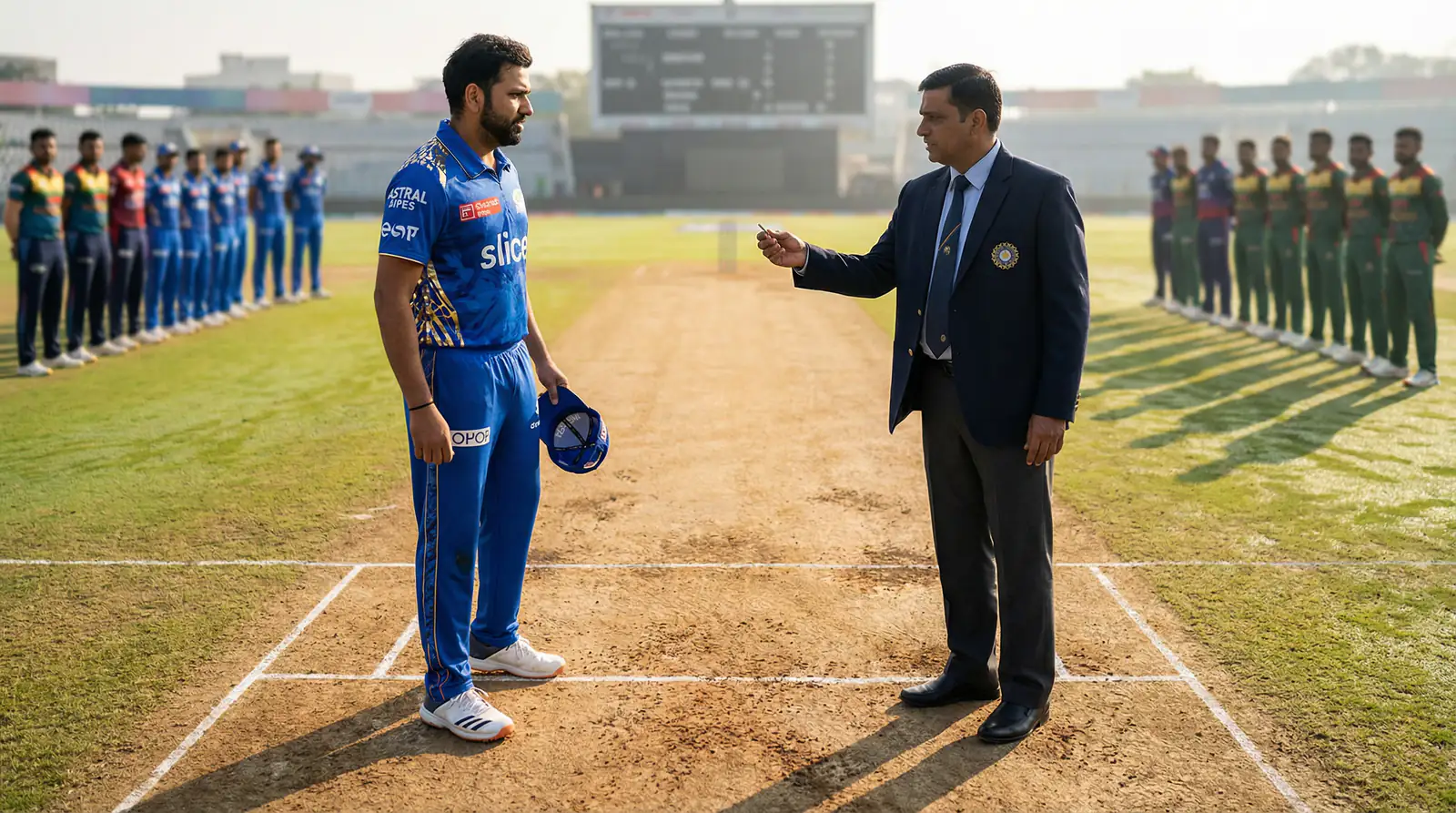
Cricket odds are not static. The price you see when a market opens three days before a match is rarely the price available at the moment the first ball is bowled. Between those two points, a series of information events — the toss, team announcements, injury updates, late squad changes — lands on the market and shifts the odds, sometimes dramatically. For bettors, these pre-match information windows represent some of the most exploitable moments in cricket betting, because the market is forced to adjust quickly to new data, and quick adjustments are often imperfect ones.
Most recreational bettors place their wagers hours or days before a match and then wait for the result. They miss the post-toss price movement entirely. They do not check whether a key player has been rested or whether an injury has forced a last-minute squad change. This passivity is a gift to anyone willing to stay engaged during the final hour before a match, because that is when the most actionable information arrives and when the market is most likely to misprice it.
This guide breaks down the three major pre-match information events — the toss, team news, and late changes — and explains how to read and react to each one for betting advantage.
The Impact of the Coin Toss on Match Odds
The coin toss is unique to cricket among major sports. No other game allows a random event to determine a strategic choice — bat or bowl first — that can materially influence the outcome. The betting market knows this, which is why odds shift immediately after the toss. But the market's reaction is not always calibrated correctly, and the gap between the actual toss impact and the perceived toss impact is where value lives.
The importance of the toss varies enormously by format and conditions. In Test cricket played on a deteriorating subcontinental pitch, winning the toss and batting first can be worth a 15-20% swing in win probability. The team batting last on a crumbling, spinning surface faces a dramatically harder task, and the odds should reflect this. In contrast, a T20 match on a flat pitch under lights in Dubai might see the toss barely move the odds at all, because conditions are neutral and neither batting nor bowling first offers a meaningful advantage.
The key analytical skill is knowing, before the toss happens, how much the toss should matter in the specific context of the upcoming match. If you have assessed that the toss is worth a 10% probability swing but the market only adjusts by 5% after the result, the team that won the toss is underpriced. If the market overreacts with a 15% swing, the team that lost the toss might now be the value side.
This pre-assessment requires understanding the venue, the pitch, the weather forecast, and the format. Day-night matches in the subcontinent, where dew makes second-innings bowling difficult, are classic examples of high-toss-impact situations. Green-top pitches in New Zealand or England, where bowling first under cloud cover can be decisive, are another. On the other hand, matches on flat, dry pitches with little expected weather variation are low-toss-impact situations where the market's post-toss adjustment should be modest.
Team News: The Announcement That Moves Markets
Official team announcements typically arrive 30 minutes to an hour before the scheduled start of play, and they can move odds significantly. The inclusion or omission of a single player — particularly a frontline fast bowler or a top-order batter — can shift the market by several percentage points, because individual players have a measurable impact on team performance that the pre-announcement odds could not fully account for.
The most impactful team news involves changes to the bowling attack. A team that drops an experienced seamer for a spin option is signalling its reading of the pitch, and that signal is worth more than any third-party pitch report. If the home team — which has inspected the pitch and practised on it — decides to play three spinners instead of two, the conditions are likely to favour slow bowling more than casual observers might expect. This information should feed directly into your assessment of match totals, session betting, and player performance markets.
Batting order changes carry their own significance. A promoted opener — a player moving from number four to open the innings — changes the top batsman market dynamics because the opener faces more deliveries and has a higher probability of being the leading scorer simply by virtue of batting longer. Conversely, a key batter being dropped down the order reduces their top batsman probability, and the market may not adjust these individual player markets as quickly as it adjusts the match winner line.
Rest and rotation policies during tournaments add another dimension. In competitions like the IPL or the Big Bash League, teams routinely rest key players during the group stage when their position in the standings is secure. A team's odds might look attractive based on their full-strength lineup, but if their primary fast bowler and star batter are both resting, the actual team taking the field is substantially weaker. Checking the confirmed playing eleven rather than trusting the pre-match odds is essential during tournament phases where rotation is common.
Late Changes and Injury Updates: The Final Information Edge
Late changes — players pulling out of a match after the team has been announced, or last-minute replacements due to injury or illness — create the sharpest information asymmetries in cricket betting. The window between a late change becoming public and the market fully adjusting to it is often measured in minutes, and the bettors who are paying attention during this window can capture value that is unavailable at any other time.
The reason late changes create such pronounced mispricings is that they are unexpected. The market has already priced in the announced team, so a sudden replacement forces a recalculation that happens unevenly across different betting markets. The match winner line might adjust within minutes because it attracts the most attention and volume, but player performance markets — top batsman, top bowler, man of the match — may lag behind because fewer people are monitoring them. A late replacement bowler entering the team might push the top bowler odds for the opposition's batters down (fewer quality overs to face), but the bookmaker may not reprice those markets until money forces the adjustment.
Injury information in cricket follows a distinctive pattern. Unlike football, where injury lists are published regularly, cricket teams are often deliberately vague about player fitness in the days before a match. A player might be described as "managing a niggle" or "expected to be fit" without any clear confirmation until the team is officially announced. This deliberate ambiguity creates a market that prices in uncertainty, and when the certainty arrives — either the player is confirmed to play or confirmed to miss out — the odds adjust in a way that can overcorrect.
For Test cricket, injury information is particularly valuable because the five-day format magnifies the impact of a missing player. A fast bowler who breaks down on day one of a Test match leaves his team effectively playing with four bowlers for the remaining four days. The live betting markets will adjust, but the pre-match markets have no way to account for this risk, which is why monitoring player fitness closely throughout a series gives you an edge that compounds over multiple matches.
The Pre-Match Information Sequence
Understanding the typical sequence of pre-match information allows you to plan your betting activity around the moments of highest value. For a typical international cricket match, the information unfolds roughly as follows.
The day before the match, teams may hold optional or main training sessions at the venue. Beat reporters and cricket journalists often share observations from these sessions — who bowled in the nets, who looked in good rhythm, who appeared to be nursing a strain. This information is publicly available through social media and cricket news sites, and it can give you early signals about likely team composition before the official announcement.
On match day, the pitch report usually becomes available a few hours before the start. Groundstaff and commentators inspect the surface and offer their assessment of whether it will favour pace or spin, and how it is likely to behave over the duration of the match. This is the point where you should start forming your conditions-based analysis, because the pitch report is the single most valuable piece of predictive information for totals and innings markets.
The toss happens 30 minutes before the scheduled start, and it is followed almost immediately by the announcement of the playing elevens. These two events — arriving within minutes of each other — create the densest information window of the entire pre-match period. The toss tells you the strategic choice; the team sheets tell you the tactical execution. Together, they provide a clear picture of how each team plans to approach the match, and this picture often diverges from the market's pre-toss assumptions.
The optimal approach is to have your pre-match analysis largely complete before this window opens, with conditional plans for different toss outcomes and team compositions. If your analysis says "back Team A if they win the toss and bat first, but stay out if they bowl first," you can act decisively in the minutes after the toss rather than scrambling to form a view while the odds are shifting.
The Thirty-Minute Market
The half-hour between the toss and the first ball is the most underappreciated window in cricket betting. During these thirty minutes, three things converge: maximum information, maximum market movement, and minimum competition from casual bettors who have already placed their wagers. It is, in a sense, a private market — one that exists only for those who choose to show up at the right time with the right preparation. The irony is that most bettors treat this window as dead time, scrolling through their phones while waiting for the match to begin, rather than recognising it as the moment when the gap between what the market knows and what you know is at its widest. The toss has landed. The teams are announced. The pitch has been read. Everything you need is in front of you. The only question is whether you have done the work in advance to know what it all means.
