 OnCricketBetting
IPL Betting Strategies for the Indian Premier League
 Available in US
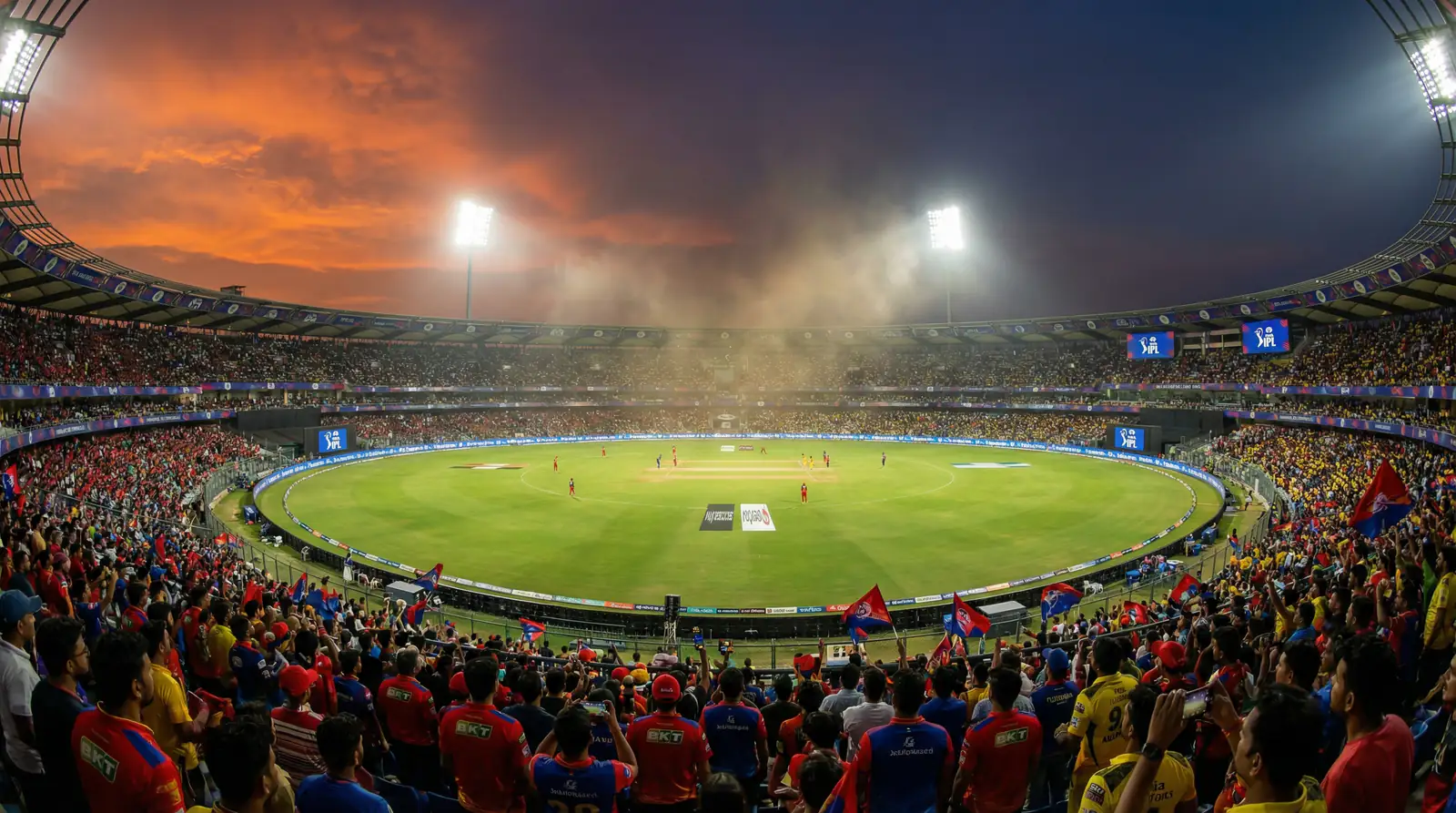
The Indian Premier League is not just the biggest T20 cricket league in the world — it is one of the most heavily bet-upon sporting events in any discipline. With ten franchises, a two-month season, and a format designed to produce drama, the IPL generates more betting volume than many national football leagues. If you are going to bet on cricket in 2026, you will almost certainly bet on the IPL.
But the IPL is not a normal cricket tournament. Its auction-driven roster construction, impact player substitutions, and franchise-specific strategies create dynamics you will not find in international cricket. This guide covers what makes IPL betting unique and how to approach it with a clear analytical framework.
Understanding the Indian Premier League Structure
The IPL features ten franchises competing across a league stage followed by playoffs. Each team plays fourteen matches in the league phase — seven at home and seven away. The top four teams qualify for the playoffs, which follow an eliminator-qualifier format that gives the top two teams an extra chance to reach the final.
This structure has direct implications for betting. During the league stage, teams manage workloads, rotate squads, and sometimes rest key players in dead rubbers once qualification is secured. Late-season matches involving already-qualified teams can produce unexpected lineups and results that the betting market does not always price correctly. Conversely, teams fighting for the fourth playoff spot often produce their most intense and unpredictable cricket.
The home-and-away split matters significantly. Venues in India vary enormously in their characteristics. Wankhede Stadium in Mumbai is among the best batting surfaces in the world, while M.A. Chidambaram Stadium in Chennai is historically spin-friendly and lower-scoring. A team's home record can diverge dramatically from its away form, and the IPL's concentrated schedule means a run of home matches can propel a mid-table team into playoff contention or expose a struggling team to a series of unfavourable conditions.
The Auction and Its Betting Implications
The IPL mega auction, held before each cycle, and the annual retention-and-mini-auction system fundamentally reshape team compositions. Unlike international cricket where squads are relatively stable, IPL rosters can look completely different from one season to the next. A franchise that finished last might acquire three world-class players and become a title contender. A champion team might lose its core and spend a season rebuilding.
This volatility creates both danger and opportunity for bettors. Outright winner markets open immediately after the auction, and early prices often reflect name recognition rather than squad balance. A team that signs a marquee batter for a record fee gets public attention, but the bettor who notices that team lacks a quality death bowler has identified a structural weakness the market may not have priced.
Studying auction spending patterns reveals franchise philosophies. Some teams invest heavily in batting firepower and take calculated risks with budget bowling options. Others build around a premium bowling attack and rely on mid-tier batsmen to do enough. Neither approach is inherently superior, but knowing which strategy each franchise employs helps you predict how they will perform in different match situations and against different opponents. The franchise that spent its budget on top-order batting might dominate on flat pitches but struggle in low-scoring affairs where bowling depth matters.
Key Players and Market Movers
Individual players exert more influence on T20 outcomes than in any other cricket format. A single innings from a destructive batter or a four-over spell from a premium bowler can decide a match. The IPL concentrates global talent into ten squads, meaning every match features players capable of single-handedly shifting the result.
For betting purposes, the players who matter most are not always the biggest names. Impact player substitutions, introduced in 2023, allow teams to replace one player during the match, effectively creating a twelve-player squad. This rule has amplified the importance of squad depth and tactical flexibility. A team might send in a specialist pinch-hitter during the powerplay and then substitute a bowler for the death overs. Understanding how each franchise uses the impact player rule gives you an informational edge that many casual bettors overlook.
Overseas player slots remain a critical constraint. Each team can field a maximum of four overseas players in the XI, which forces difficult selection decisions. Monitoring team announcements and understanding which overseas players are likely to be rotated gives you a head start on adjusting your pre-match assessments. If a franchise rests its star overseas fast bowler for a league-stage dead rubber, the odds should shift significantly — and sometimes they do not shift quickly enough.
IPL-Specific Betting Markets
Beyond the standard match winner and top batsman markets, the IPL generates several markets that are either unique to the tournament or behave differently than in international cricket. Powerplay run totals are a major market category, with bookmakers setting lines for runs scored in the first six overs. The IPL's batting-friendly conditions and aggressive team strategies typically produce higher powerplay scores than international T20s, so applying international benchmarks to IPL totals is a mistake.
The "highest individual score" market asks whether any batsman in the match will exceed a specified threshold, often set around 50.5 or 75.5 runs. In the IPL, where strike rates are elevated and batting conditions tend to favour aggression, the over on these lines can be more viable than in international cricket. However, the bookmakers know this too, and the odds reflect the higher scoring environment. The edge comes from identifying specific matchups — a destructive opener facing a weakened bowling attack on a flat pitch — rather than playing the market generically.
Player performance markets have grown substantially. Bookmakers now offer lines on individual player runs, wickets, boundaries, and even dot ball percentages. These markets are where specialist IPL knowledge pays off most handsomely. If you follow the league closely enough to know that a particular bowler has been struggling with his yorker in recent games, or that a batsman has changed his approach to play more conservatively in the middle overs, you hold information that the general market may not reflect.
Venue Analysis: The IPL's Hidden Variable
Venue analysis is arguably the single most important factor in IPL betting. India hosts matches across a dozen different cities, each with distinct pitch and weather conditions. A match in Jaipur plays nothing like a match in Kolkata, and the betting lines should reflect that — but they do not always do so with sufficient nuance.
High-scoring venues include Bangalore's M. Chinnaswamy Stadium, which sits at altitude and has short boundaries, and Mumbai's Wankhede Stadium, where the flat deck and evening dew make chasing a significant advantage. At these venues, first-innings totals regularly exceed 190, and the team batting second holds a statistical edge. Betting on the chasing team or taking the over on run totals at these grounds is often the correct approach, though the market frequently adjusts for this.
Lower-scoring venues like Chennai's M.A. Chidambaram Stadium and Lucknow's Ekana Stadium tend to assist spin bowlers and slow down scoring in the middle overs. Teams with strong spin bowling options thrive here, and the under on run totals becomes more attractive. The toss also matters more at these venues because teams winning the toss on deteriorating pitches often choose to bat first and post a total that becomes increasingly difficult to chase as the surface wears.
Dew is a critical factor that many bettors underestimate. Evening matches across most Indian venues produce significant dew in the second innings, making the ball harder to grip for bowlers and easier to time for batsmen. This systematically favours the chasing team and can turn a challenging target into a straightforward chase. If you are betting on an evening IPL match and the toss factor is not reflected in the odds, you may have found value.
Timing Your IPL Bets
The IPL season is long enough that betting strategy should evolve as the tournament progresses. In the first two weeks, teams are still finding their combinations, overseas player roles are being established, and the impact player strategy is being tested. Match outcomes during this phase are harder to predict, and the market is also less well-calibrated because there is limited season-specific data to work with.
Mid-season is where informed bettors tend to find the most value. By this point, team strategies are clear, player form is established, and venue patterns for the season have emerged. The market adjusts to some of this information, but it is rarely as fast or complete as a dedicated IPL follower. If you have been watching matches closely and tracking how individual bowlers perform at specific venues, your model of the tournament is likely more nuanced than the bookmaker's.
The playoff phase introduces a completely different dynamic. Knockout pressure changes how teams approach games. Conservative batting, defensive field placements, and an increased reliance on experience over raw talent are common in playoffs. The market often underestimates the role of experience in playoff situations, which means veteran-heavy squads can offer value even if their league-stage form was inconsistent.
Beyond the Obvious: Reading the IPL Market
The IPL attracts enormous betting volume from the Indian subcontinent, which means market movements can be driven by sentiment as much as analysis. Franchises with large fanbases — Mumbai Indians, Chennai Super Kings, Royal Challengers Bengaluru — tend to attract disproportionate public money, which can push their odds shorter than warranted. This creates systematic value on their opponents, particularly in matches where the public favourite is away from home or missing a key player.
Pay attention to toss results. The IPL has consistently shown a chasing bias, particularly at high-scoring venues with evening dew. When the toss is won and the winning captain elects to bowl, odds should shift toward the chasing team. If they do not shift enough, that is your window. Conversely, if a team is forced to chase at a venue where batting first is historically advantageous, the market may overcorrect, and backing the team batting first at improved odds could be the smarter play.
The deepest IPL bettors think in terms of matchups, not reputations. A franchise with a strong overall squad might have a specific vulnerability — say, a weak middle-order against quality leg-spin — that their next opponent is perfectly equipped to exploit. The market prices the overall squad strength; you can price the specific matchup. That gap is where IPL betting becomes genuinely profitable.
