 OnCricketBetting
Live In-Play Cricket Betting Strategies
 Available in US
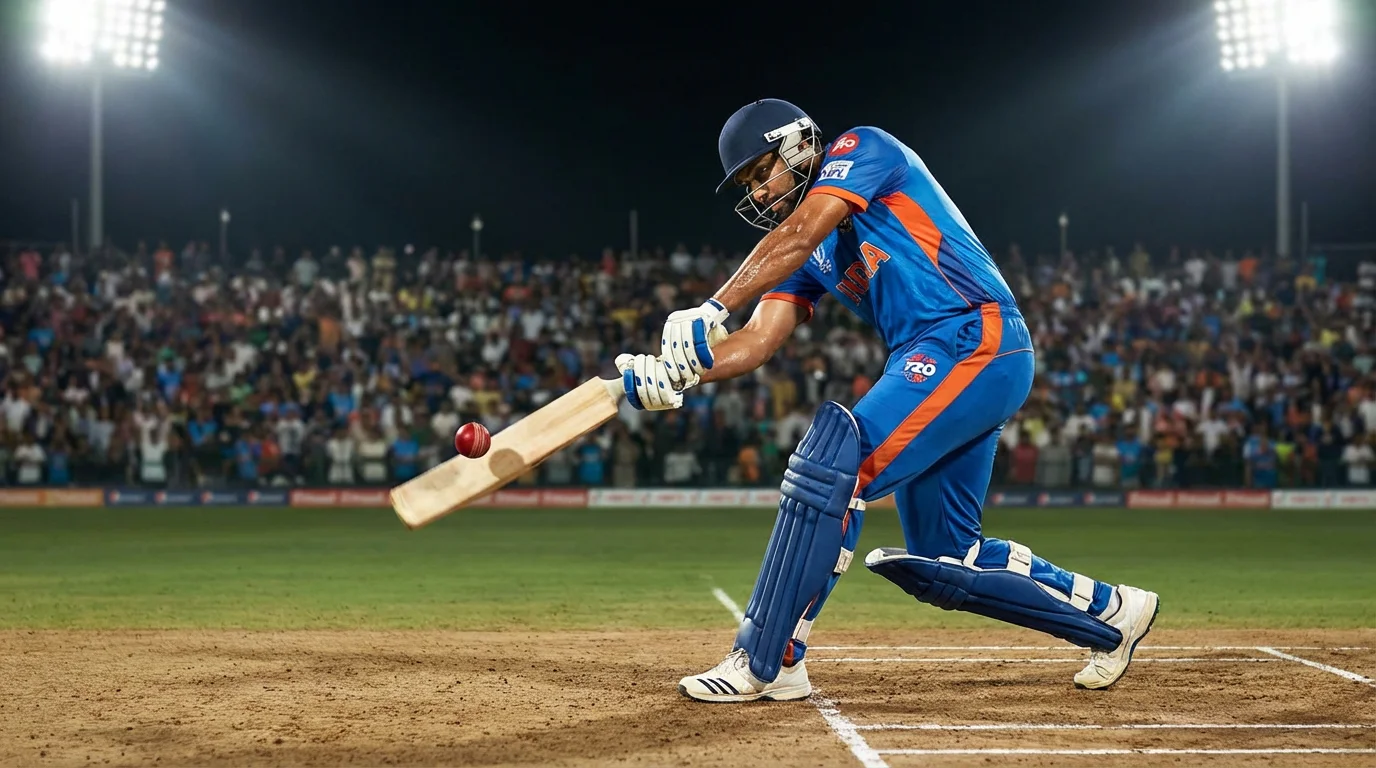
Pre-match betting is educated guessing. Live betting is a conversation with the game as it unfolds. The odds shift with every delivery, every wicket, every boundary — and somewhere in those shifts are moments where the market overreacts, underreacts, or simply gets it wrong. That is where in-play cricket betting becomes genuinely interesting.
Cricket is uniquely suited to live betting because of its stop-start nature. Every ball is a discrete event with a pause before the next, giving you time to process information and act. Unlike football, where play is continuous and live odds are largely automated, cricket's rhythm allows human analysis to keep pace with the market. This guide covers the strategies that work in live cricket betting and the traps that catch undisciplined bettors.
Why Cricket Markets Reward In-Play Bettors
Cricket matches evolve through distinct phases, and each phase carries its own probability dynamics. A T20 innings has the powerplay (overs 1-6), the middle overs (7-15), and the death overs (16-20). Each phase favours different types of players and produces different scoring patterns. The transition between phases is where the market is most likely to misprice the situation.
Consider a scenario where a team loses two early wickets in the powerplay but has a deep, powerful middle order. The market will typically overcorrect after early wickets, lengthening the odds on the batting team more than the actual probability warrants. If you know the squad well and recognise that the incoming batsmen are ideally suited to the middle-over phase, the post-wicket odds can offer substantial value.
Test cricket amplifies this effect. Sessions within a Test match create natural inflection points where the balance shifts. A batting collapse before lunch might push the bowling team's odds dramatically shorter, but if the pitch is flat and the remaining batsmen are capable, the morning damage may not be as decisive as the market suggests. Experienced in-play bettors learn to distinguish between genuine momentum shifts and temporary blips that the market overprices.
Reading Run Rates and Required Rates
In limited-overs cricket, the required run rate is the single most important live metric. It tells you how many runs per over the chasing team needs to maintain from this point forward. But the raw number is less important than the context around it. A required rate of 8.5 per over with ten wickets in hand and two set batsmen at the crease is very different from 8.5 per over with seven wickets down and the tail exposed.
The live betting market incorporates the required run rate but often fails to fully account for the qualitative factors that determine whether a team can sustain that rate. Which batsmen are still to come? How many overs of spin remain versus pace? Is dew becoming a factor? Are the fielding restrictions about to change? These are the questions that separate profitable in-play betting from chasing green numbers on a screen.
One particularly effective strategy involves identifying the "crossover point" in a chase — the moment where the required rate transitions from comfortable to challenging. In T20 cricket, a required rate under 9 per over with eight or more wickets in hand is generally manageable. Once it climbs above 11 per over, even strong batting lineups face serious difficulty. The market often prices the transition between these zones as a gradual curve, but in reality, it tends to happen suddenly after a cluster of dot balls or wickets. Anticipating that inflection and betting before it arrives is a reliable edge.
Momentum and Pressure Phases
Cricket has a concept that statisticians struggle to quantify but every serious follower understands intuitively: momentum. A team that has just hit three consecutive boundaries feels different from a team that has played out six dot balls in a row, even if the scoreboard difference is minimal. Live betting markets respond to momentum, but they tend to respond in the rearview mirror — pricing what just happened rather than what is about to happen.
Pressure phases in cricket are measurable. The dot ball percentage over the last two or three overs tells you whether the batting team is scoring freely or being strangled. If the dot ball percentage spikes above 50% during a chase, the batting team is building pressure on themselves regardless of the current required rate. Conversely, a sudden drop in dot ball percentage after a period of accumulation often signals that the batsmen have weathered the difficult period and are about to accelerate.
The bowling team's options also diminish as the innings progresses. In T20 cricket, captains must manage their best bowlers' overs carefully. If the premium death bowler has already used three of his four overs by the 15th over, the batting team has a structural advantage in the final phase. The market does not always reflect bowling resource depletion accurately, which creates in-play opportunities for bettors who track bowler usage in real time.
The Toss and First-Innings Response
The toss result is the first major in-play event of any cricket match, even though it technically occurs before the first ball. Once the toss happens, the market adjusts immediately. In conditions where chasing is favoured — evening T20 matches with dew, for example — the toss winner who elects to bowl will see their odds shorten significantly. If you have a pre-formed view on the toss's impact at a specific venue, you can place your bet in the window between the toss and the first ball, when the market is still processing the information.
The first innings score provides the second major recalibration point. In a T20 match, the break between innings is when the market resets based on the total posted. A total of 175 might be considered par at a given venue, and the odds for the chasing team will reflect that. But "par" is an average, not a destiny. If the 175 was scored on a deteriorating pitch and the chasing team lacks quality against spin, the market's par-based pricing could be significantly off. Similarly, if the fielding team dropped three catches and bowled poorly in the death overs, the 175 might be below what the conditions warranted, meaning the pitch is even better than the total suggests.
Using the inter-innings break effectively is one of the strongest edges in live cricket betting. While the public reacts to the headline total, you should be asking: was this total good or bad given the specific conditions, and which team's strengths and weaknesses align better with the second-innings situation? The answer to that question often diverges from the market's initial second-innings price.
Discipline: The Non-Negotiable Skill
Live betting is addictive by design. Every ball presents a new data point, and the urge to act on each one is powerful. The single most important in-play skill is knowing when not to bet. Most deliveries in a cricket match contain no actionable information for a bettor. A dot ball, a single, a routine two — these are the background noise of a match. The signal comes from events that meaningfully change the probability landscape: a key wicket, a dropped catch, a bowling change, a sudden weather shift.
Setting pre-match criteria for when you will enter the live market helps prevent impulsive betting. Before the match starts, identify two or three specific scenarios that would create value. Perhaps you believe Team A is underpriced if they lose the toss, or that a particular batsman's dismissal would trigger an overcorrection in the odds. If those scenarios materialise, act. If they do not, stay on the sideline. This approach requires patience but dramatically improves long-term results.
Staking discipline is equally critical in live betting. The temptation to chase losses during a match — doubling down after a bet goes wrong because "the game is still live" — is the fastest route to emptying a betting account. Set a maximum number of live bets per match and a maximum stake per bet before the first ball is bowled, and do not deviate regardless of how the match unfolds.
Format-Specific In-Play Considerations
T20 live betting moves fast and rewards quick decision-making. The entire innings lasts roughly 80 minutes, and the market adjusts after every ball. Your edge comes from processing information faster than the algorithm that drives the live odds. Focus on powerplay wickets, death-over bowler matchups, and the required rate inflection points discussed earlier.
ODI live betting operates on a longer timeline but follows similar principles. The middle overs in an ODI (overs 11-40) are often the most undervalued phase for live betting because they tend to be less eventful. Run accumulation during this phase is steady, and the market can become complacent. A sudden acceleration or collapse during the middle overs catches the market off guard more frequently than similar events during the powerplay or death overs.
Test cricket in-play betting is the most cerebral and arguably the most rewarding. Matches last up to five days, and the market adjusts to weather forecasts, pitch deterioration, and bowling workloads in real time. The draw price in a Test match is one of the most dynamic odds movements in all of cricket betting. If a full day is lost to rain, the draw price shortens dramatically — but sometimes it shortens too far or not far enough depending on the remaining match situation. Test cricket rewards patience and deep contextual knowledge more than any other format.
The Market Is a Mirror, Not a Map
Live cricket odds tell you what the market collectively believes right now. They do not tell you what will happen. The best in-play bettors treat the market as a mirror reflecting current sentiment, not a map predicting the future. When your analysis tells you the mirror is distorted — when the market is overreacting to a wicket, underreacting to a weather change, or mispricing a bowling matchup — that is when you act.
The rest of the time, you watch. You study how the market reacts to different events and build a mental model of its tendencies. You notice that the algorithm shortens the bowling team's odds by a fixed amount after each wicket regardless of who was dismissed. You notice that the market is slow to adjust for dew during evening matches. You notice that the required rate fear premium kicks in at a specific threshold. These patterns repeat. Learning to recognise them is what separates the profitable live bettor from the one who is just along for the ride.
